All Episodes

EP 133. Gluten y enfermedad celíaca: lo que debes saber sobre síntomas y diagnóstico - Laura Crespo

EP 133. Gluten and Celiac Disease: What You Need to Know About Symptoms and Diagnosis - Laura Crespo

Celiac disease is an autoimmune and systemic condition that goes far beyond simply eliminating gluten from your diet. In this episode, joined by Dr. Laura Crespo, we take a deep dive into what actually happens when a person with celiac disease consumes gluten, how the disease is correctly diagnosed, and why it is essential not to remove gluten before undergoing testing. Furthermore, we address common and lesser-known symptoms, the differences between celiac disease, wheat allergy, and non-celiac gluten sensitivity, and we answer questions about cross-contamination and everyday foods and products that may inadvertently contain gluten. An essential episode for understanding celiac disease through scientific evidence and debunking common myths.
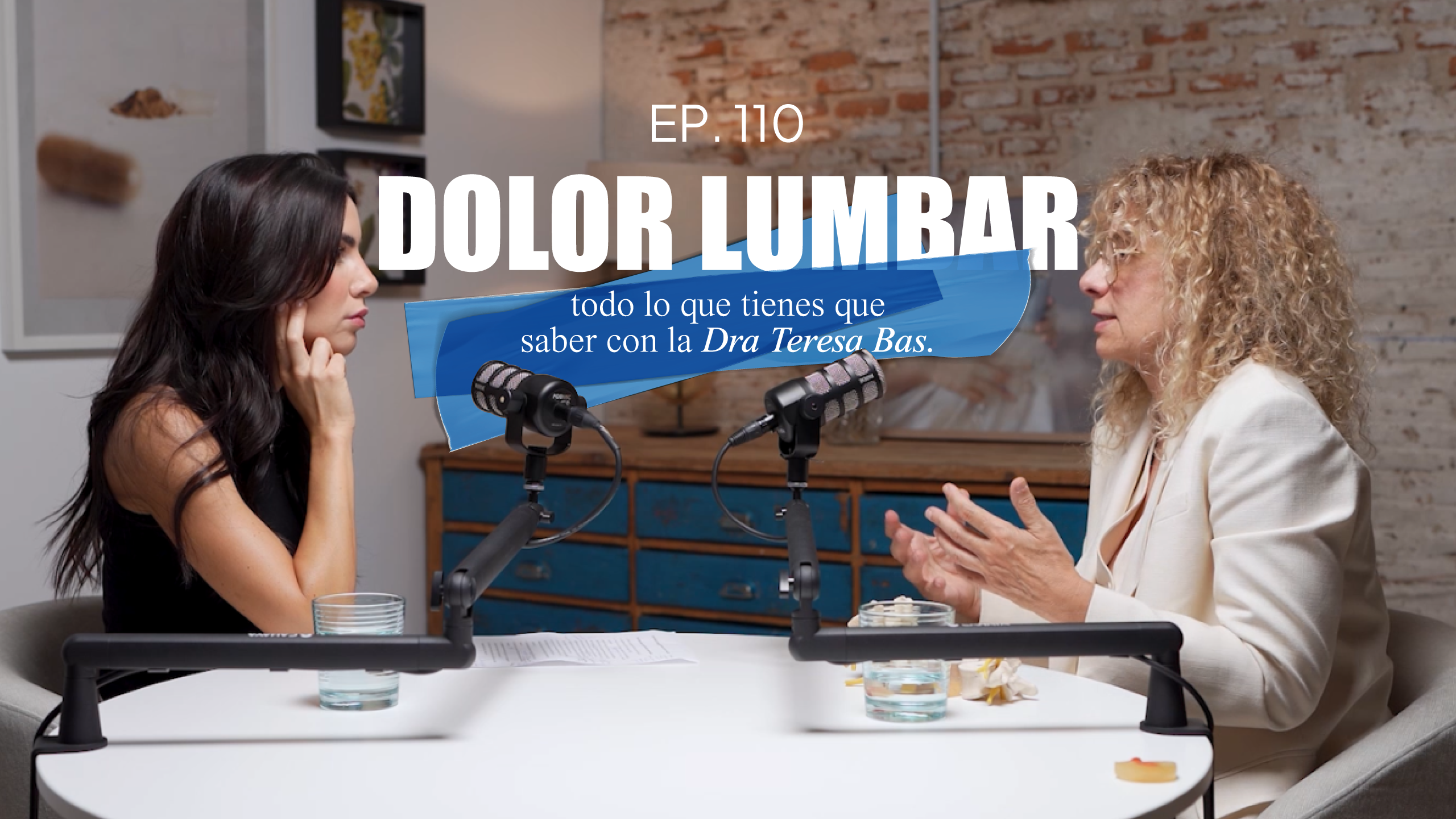
EP 110. Dolor Lumbar con la Dra. Teresa Bas.

EP 110. Lumbar Pain with Dr. Teresa Bas.

Hellooooo:), welcome back to another episode of the podcast and the start of a new season, which comes with some very important new features: among them, the addition of video format and the presence of very special guests, both on a personal and professional level. And I think there could be no better person to accompany me at this beginning than Dr. Teresa Bas: spine surgeon, expert in the treatment of scoliosis in adults and children, head of the Spine Unit at the La Fe University Hospital in Valencia, associate professor at the University of Valencia and, also, my mother. In today's episode, we'll learn what lower back pain is, its various causes, what distinguishes it from sciatica, and how these problems are addressed medically and surgically. We'll also explore lifestyle changes and supplements that can help improve lower back pain, herniated discs, and sciatica, as well as the crucial role of exercise and nutrition in spinal health. And last but not least, we'll discuss the differences in spinal pathology between women and men. I hope you find it useful and learn a lot. My mother's Instagram handle is @dra.teresabas His private practice is Clinica Bas, located at Joaquin Costa 42 in Valencia, Spain. His work at the hospital is in the Spine Unit at the La Fe University and Polytechnic Hospital in Valencia, Spain. For more information, you know you can find me on Instagram @isabelvina where I share daily content. My TikTok @isabelvinabas On my YouTube channel And the supplements I've formulated are on my website . My website
EP 108. Composición corporal en verano: cómo no perder lo que has ganado.

EP 108. Body composition in summer: how not to lose what you have gained.

Hello!!! In today's podcast, I'll try to share tips you can apply to maintain all the health gains you've made with your lifestyle routine throughout the year. This way, if you wish, you can fully enjoy the summer while minimizing the metabolic and overall health losses that can be associated with typical summer routines, where we can't be as diligent with our exercise, diet, and other lifestyle measures. It's not necessary to apply them all, or all at once. The important thing is to be aware of them so that, if we wish, we can apply them. Ideally all of them, but if not, any you can apply, even for just a couple of days, will always be beneficial. Every little helps. Every stone makes a wall. I hope you like it. Big kisses!! For more information, you know you can find me on Instagram @isabelvina where I share daily content. My TikTok @isabelvinabas On my YouTube channel https://www.youtube.com/channel/UC-dfdxLBcvfztBvRAKZSXGQ And the supplements formulated by me https://ivbwellness.com For more information, you know you can find me on Instagram @isabelvina where I share daily content. My TikTok @isabelvinabas On my YouTube channel And the supplements I've formulated are on my website . My website
EP 97. Histamina y salud: la conexión que estás ignorando.

EP 97. Histamine and Health: The Connection You're Ignoring.

Hola :) In today's episode, I'm going to talk to you about everything related to the biogenic amine that our body produces normally and that, when in balance, is key for the immune system, memory, pain management, stomach acid production, and appetite control. HOWEVER, when it's in excess, it can lead to symptoms and signs that are "so" unrelated to each other, such as:Hives, itchy skinAbdominal bloating, abdominal pain, diarrheaRunny nose, itchy nose, cough, continuous tearingHypotension, tachycardiaMuscle and joint painI will also tell you about the endogenous (our body) and exogenous (diet or medication) origins of histamine accumulation.What can we do to diagnose histamine excess, first ruling out mastocytosis, mast cell activation syndrome, diseases like celiac disease, autoimmune conditions...What foods are high in histamine, which are lowSupplements that can help: quercetin, vitamin D, butyrate, trans resveratrol, probiotics like L. rhamnosus GG, L. plantarum...For more information, you know you can find me on my Instagram @isabelvina where I share daily content My TikTok @isabelvinabas On my YouTube channel https://www.youtube.com/channel/UC-dfdxLBcvfztBvRAKZSXGQ And the supplements formulated by me https://ivbwellness.comFor more information, you know you can find me on my Instagram @isabelvina where I share daily content My TikTok @isabelvinabasOn my YouTube channel YouTube ChannelAnd the supplements formulated by me on my website My Website
Ep 85. Cansancio Crónico: Posibles Causas.

Ep 85. Chronic Fatigue: Possible Causes.

Hola! In today's episode, I'll tell you about the reversible and/or manageable causes of chronic fatigue.If you feel that no matter how much you sleep, you take care of your diet and exercise to the fullest, and you still feel like a truck ran you over, this episode can help you a lot.In the podcast, I talk about which supplements can help you with the different causes or factors. I'm writing them down here so that if my pronunciation isn't the clearest, you have them in writing : )Chronic stress: Reishi, schizandra, eleuthero, rhodiola, ashwagandha, and theanine.Key micronutrients: Magnesium, Vitamin B12 (in methylcobalamin form if possible), iron, vitamin D3K2, vitamin B1 (thiamine), Coenzyme Q10.For more information, you know you can find me on my Instagram @isabelvina where I share daily content.On my YouTube channel https://www.youtube.com/channel/UC-dfdxLBcvfztBvRAKZSXGQ And the supplements formulated by me https://ivbwellness.comFor more information, you know you can find me on my Instagram @isabelvina where I share daily content.My TikTok @isabelvinabasOn my YouTube channel YouTube ChannelAnd the supplements formulated by me on my website My website
EP 64. ¿Por Qué Perdemos Cabello?

EP 64. Why Do We Lose Hair?

Hair loss: causes, types, and what you can do to take care of it Hello, I am Dr. Isabel Viña Bas, a physician and Scientific Director of IVB Wellness Lab. Hair loss generates many questions in consultations: is it normal to lose hair every day?, why does hair fall out?, are all types of alopecia the same?, do diet, stress, or hormones play a role?, and what role can food supplements play? The reality is that there is no single cause of hair loss. Understanding what type of hair loss we have is the first step, before thinking about any treatment. In this episode of Your Friends the Hormones we review the main causes, the differences between the types of alopecia, and some nutrients and compounds that may be interesting depending on the situation. Before looking for what to take to stop hair loss, there is a more important question: why is it falling out? Is it normal for hair to fall out every day? Yes. Hair is constantly renewing itself, just like skin or intestinal cells: hair follicles follow a cycle in which some hairs grow while others enter the shedding phase. That is why losing between 80 and 100 hairs a day can be part of what is normal. What is worth looking at is hair density. If hair falls out but we still have a similar amount and density, it is most likely normal renewal. If, on the other hand, less populated areas appear, the hair becomes thinner and thinner, or the density decreases, it is worth investigating what is happening. Not all hair loss is the same When we talk about alopecia, we tend to think of a single problem, but there are several types. A first classification separates scarring alopecias from non-scarring ones, and the difference matters: in scarring ones, there can be permanent destruction of the hair follicle. If inflammation and fibrosis exist, the follicle can end up replaced by scar tissue, and in that area, hair no longer grows back the same. Although they are less frequent, it is worth knowing about them and going to a dermatologist when signs appear that suggest one of these forms of alopecia. What are scarring alopecias? Within this group, there are different diseases. Some autoimmune ones, such as lupus, can affect the scalp and cause permanent hair loss. Lichen planopilaris inflames the follicles and can end in fibrosis and their destruction. In dissecting cellulitis, certain microorganisms infect the follicles, and the subsequent inflammation damages them irreversibly. The frontal fibrosing alopecia mainly affects women and is usually noticed as a progressive recession of the hairline. In these cases, detecting it early is especially important. Therefore, in the face of persistent hair loss, significant changes in density, or scalp alterations, an assessment by a specialized dermatologist can be key. Androgenetic alopecia also affects women Androgenetic alopecia is probably the most well-known form of hair loss. We usually associate it with men, but it also affects women and accounts for a significant part of female alopecias. Over time, the hair becomes thinner and smaller, which we call follicle miniaturization: the hair has less thickness, spends less time in the growth phase, and the density decreases. In women, it is seen especially in the area of the central part. In men, it is more frequent in the frontal area, the temples, and the crown. What is the relationship between testosterone and hair loss? An enzyme, 5-alpha-reductase, transforms part of the testosterone into dihydrotestosterone (DHT). DHT has a higher affinity for certain receptors and, in predisposed people, can affect the hair follicle. When this pathway is excessively activated, the hair spends less time in the growth phase and the follicle becomes smaller and smaller, resulting in thinner hair with less density. Inflammation also influences hair loss The body needs a certain degree of inflammation for certain physiological processes to occur. The problem appears when the inflammation becomes chronic. Several prostaglandins are involved in the hair follicle, and if there is excess inflammation, that balance can be altered. That is why, in androgenetic alopecia, two mechanisms that feed back into each other can coexist: greater activation of the DHT pathway and an inflammatory environment that harms the follicle. That explains why there is no single solution for everyone with hair loss. First, you have to identify which mechanisms are involved. What is telogen effluvium and why does it appear? Another frequent type of hair loss is telogen effluvium: many hairs pass almost at the same time from the growth phase to the shedding phase. That is why the person may suddenly notice much more hair in the shower, on the brush, or on the pillow. Unlike some scarring alopecias, it is usually a reversible process. It can appear after a period of stress, a very restrictive diet, significant weight loss, certain medications, or postpartum. In the postpartum period, the sudden hormonal change causes many hairs that were still growing during pregnancy to then enter the shedding phase, which is why the hair loss usually appears a few months after giving birth. It is generally temporary. Can diet cause hair loss? Yes. To grow and maintain its structure, hair needs certain nutrients, so very restrictive diets and sudden weight loss can promote hair loss. By reducing intake too much, fewer calories arrive, but also less protein, amino acids, vitamins, and minerals. Among the nutrients that may be relevant are iron, vitamin D, vitamin C, vitamin B12, and magnesium, in addition to an adequate intake of protein. This does not mean that any hair loss is due to a nutritional deficiency. What does make sense is to assess, when there is hair loss, if any deficit may be contributing. Protein also matters for hair Regarding its structure, hair is mainly formed by proteins. Among them, L-cysteine has an especially interesting role because it participates in the bonds that help maintain that structure. We can imagine a protein as a necklace and the amino acids as the pieces that form it: cysteine makes that necklace resistant and able to withstand the traction and stress to which the hair is subjected. That is why a very restrictive diet that does not provide enough amino acids can affect the quality and resistance of the hair. Taking more protein than necessary makes no sense; what matters is ensuring sufficient intake for each person's needs. Can stress cause hair to fall out? Stress is another factor that can trigger telogen effluvium. During periods of intense or sustained stress, hormonal and metabolic changes occur that can affect the hair cycle. That is why some people notice significant hair loss months after having gone through a stressful situation. The cause is not always found by looking only at what happened in the last few weeks, because hair has its own cycle. When sudden hair loss appears, it is advisable to review what has happened during the previous months. Some medications can also have an influence Certain medications can be associated with hair loss. That does not mean we should stop taking them. If a treatment has been prescribed by a doctor and hair loss appears that worries you, the appropriate thing to do is to consult the professional who prescribed it. Sometimes the medication influences the hair cycle directly and other times indirectly, by modifying the absorption or availability of certain nutrients. In the episode, we mention some antihypertensives, medications for thyroid disorders, proton pump inhibitors, certain antihistamines, hormonal contraceptives, and some antidepressants. The relationship is not always direct or simple, and that is why each person's context weighs so much. What is the relationship between the microbiota and hair loss? Intestinal health is also part of the equation. A microbiota imbalance can affect the production and absorption of certain nutrients and be related to an inflammatory state. Chronic inflammation, again, is one of the factors that can influence very different processes in the body, including hair. That is why, to take care of hair, it is not enough to look at the scalp. Hair health also depends on what happens inside the body: a varied diet, sufficient fiber, and taking care of intestinal health are part of a global strategy. Food supplements for hair loss according to the type of alopecia Supplementation depends on the type of hair loss. There is no universal food supplement for any alopecia. If we talk about androgenetic alopecia, certain compounds that act on the pathways related to DHT and inflammation may be interesting. Among them are saw palmetto, pumpkin seed extract, and lycopene, in addition to other compounds with antioxidant action. In certain formulas, ingredients such as vitamin E, N-acetylcysteine, or turmeric are also used. Silicon is of interest due to its relationship with the structure of the hair follicle and can be found, for example, in plant extracts such as horsetail or bamboo. It is worth remembering something: just because an ingredient is interesting does not mean that any hair loss will respond to it. The cause always comes before the food supplement. If you want to see what IVB has for hair care, you can start with our hair loss page or with the anti-aging collection. What happens with hair loss after pregnancy? It is usually a postpartum telogen effluvium, and it is usually reversible. In many cases, the hair begins to recover little by little after a few months. In the meantime, it is advisable to ensure an adequate diet and check that there are no nutritional deficits that hinder recovery. Nutrients such as iron, vitamin D, vitamin B12, vitamin C, zinc, and magnesium can be especially important, always according to individual needs. In addition, menstruation may return and increase iron needs in some women. Therefore, rather than taking food supplements without criteria, it makes sense to identify what each person needs. What happens with minoxidil and finasteride? There are specific pharmacological treatments for certain forms of alopecia. Minoxidil can promote hair growth and improve blood flow to the scalp, and it seems to favor more follicles remaining in the growth phase. In some cases, it is used together with other treatments. Finasteride acts on the pathway that transforms testosterone into DHT and can be effective in certain people. Not everyone responds the same way, and adverse effects can appear that must be evaluated. That is why these treatments must be indicated and supervised by a healthcare professional. Before treating hair loss, you have to know why the hair is falling out If there is one idea I would like you to remember, it is that hair loss does not have a single cause. It can be androgenetic alopecia, telogen effluvium, a nutritional deficiency, a hormonal alteration, the effect of certain medications, stress, or, in some cases, a scarring alopecia that needs specific medical attention. Therefore, in the face of persistent hair loss or an obvious loss of density, the most recommended thing is a professional assessment. A dermatologist specialized in hair can identify the type of alopecia and establish the appropriate treatment. Pharmaceutical advice also complements this approach, especially when choosing hair products and care. Doctors and pharmacists are not separate worlds: healthcare works better when different professionals work together. Taking care of hair is also taking care of what happens inside The hair can be a reflection of different processes in the body. Taking care of hair health goes beyond choosing a shampoo or looking for the food supplement that promises to stop hair loss: diet, ensuring the necessary nutrients, taking care of intestinal health, controlling stress, and, when necessary, looking for the medical cause also count. Many of the most frequent causes of hair loss are reversible or treatable, and the sooner we know what is happening, the easier it will be to choose the appropriate approach. It is about understanding when hair loss is part of normal renewal and when it warns us that something requires attention. Transforming your health is a matter of applying science with consistency, day by day. Knowing more to fear less and choosing better also applies to hair. Author: Dr. Isabel Viña Bas  I hope you like it :)For more information, you know you can find me on my Instagram @isabelvina where I share daily content My TikTok @isabelvinabasOn my YouTube channel YouTube ChannelAnd the supplements formulated by me on my website My website
EP 56. Protege tu Memoria: Consejos Prácticos.

EP 56. Protect Your Memory: Practical Tips.

Hola a todos! En este episodio del podcast, vamos a centrarnos en la salud cerebral y memoria. Así, os explicaré las 10 medidas preventivas que pueden reducir hasta un 40% el riesgo de desarrollar demencia. Estas medidas están respaldadas por la ciencia y son prácticas que todos podemos incorporar en nuestra vida diaria. Hablaremos de la mejor dieta para prevenir la demencia: la MIND Diet.Analizaremos en detalle qué alimentos componen esta dieta y cómo pueden beneficiar nuestra salud cerebral a largo plazo. También exploraremos varios suplementos clave que pueden acompañar a estas medidas de estilo de vida. Hay muchos productos en el mercado que prometen mejorar la memoria, pero ¿cuáles realmente funcionan? Analizaremos la evidencia detrás de algunos de los suplementos más populares, como la citicolina, la SAMe, la Bacopa Monnieri, el omega-3, y otros micronutrientes esenciales para la salud cerebral.Este episodio está diseñado para brindarte herramientas prácticas y basadas en evidencia para que puedas tomar el control de tu salud mental. Mi objetivo es ayudarte a entender mejor cómo cuidar tu mente y a adoptar hábitos que te mantendrán cognitivamente saludable a lo largo de los años. Para mas información ya sabéis que me tenéis en mi instagram @isabelvina dónde te comparto contenido diario En mi canal de YouTube https://www.youtube.com/channel/UC-dfdxLBcvfztBvRAKZSXGQY los suplementos formulados por mi incluyendo el MEMORY-ON, la Metil-B12 y la vitamina C que hablo en el podcast están en mi web https://ivbwellness.com Nos vemos el sábado que viene :) Para mas información ya sabéis que me tenéis en mi instagram @isabelvina dónde te comparto contenido diario Mi TikTok @isabelvinabasEn mi canal de YouTube Canal YoutubeY los suplementos formulados por mi en mi web Mi web
EP 46. Vivir con Diabetes: Entre el Manejo y la Libertad.

EP 46. Living with Diabetes: Between Management and Freedom.

In this special episode, I'll talk to you about the complexity of diabetes management and try to demystify the idea of "total control" over blood sugar. Through an honest and personal conversation, I'll try to show you why pursuing perfection in glucose levels can be more harmful than beneficial, leading to stress, guilt, and a constant sense of failure. I hope that by listening to me, you'll come to understand how a deep realization that blood sugar management is a delicate dance with your body can set you free, allowing you to live a fuller life. This episode is a powerful reminder that while we may not be able to control every aspect of diabetes, we can learn to navigate its waters with effectiveness and strength. For more information, you know you can find me on my Instagram @isabelvina where I share daily content. On my YouTube channel https://www.youtube.com/channel/UC-dfdxLBcvfztBvRAKZSXGQAnd the supplements formulated by me at https://ivbwellness.com Talk to you in 2 Saturdays :) In the meantime, take good care!!For more information, you know you can find me on my Instagram @isabelvina where I share daily content. My TikTok @isabelvinabasOn my YouTube channel YouTube ChannelAnd the supplements formulated by me on my website My Website
EP 13. Melatonina: La Hormona Olvidada.

EP 13. Melatonin: The Forgotten Hormone.

Melatonin and Fertility: The Antioxidant Shield That Protects Your Eggs and Cellular Health Hello, I am Dr. Isabel Viña Bas, physician and Scientific Director of IVB Wellness Lab. In my practice, there is a molecule that carries an unfair stereotype: melatonin. Almost everyone knows it only as "la hormona del sueño", that pill you take at night for jet lag or when insomnia hits hard. But my job is to help you know more so you can fear less and choose better, and here that starts by recognizing something that surprises most of my patients: melatonin is one of the most potent antioxidants and cellular protectors that your body produces, playing a decisive role in an unexpected area: reproductive health and the quality of your eggs. Reducing it to a simple sleep inducer ignores its real function: guardian of the redox balance at the mitochondrial level. That is the gateway to understanding its impact on your fertility What is melatonin and why is it produced throughout your body The pineal gland synthesizes melatonin at night to synchronize your circadian rhythms—everyone knows that. What science has been revealing in recent years is that it also it is produced locally in the skin, gut, pancreas, and ovaries, actuando ahí mismo, dentro de esas células. melatonin easily enters all cellular compartments. I like to explain this with a simple analogy: mitochondria are like your kitchen at home. That's where you have the stove on, where you cook to get energy (ATP). But cooking messes up the countertop, crumbs fall, grease splatters, and smoke is generated. Those waste products, in your cell, are free radicals. Coenzyme Q10 and melatonin are the ones that clean up that oxidative waste on a daily basis, without them, the cell ends up suffocated by its own smoke. Melatonin and female fertility: why your egg needs a "super chill" environment the relationship between melatonin and female fertility you have to go down to the ovary. Each egg matures inside a follicle, floating in a watery medium: the follicular fluid. For the egg to mature properly, become fertilized, and for the embryo to implant in the uterus, that liquid needs to be a neutral environment, practically free of oxidizing substances, something like "super chill". The problem is that our lifestyle (chronic stress, lack of rest, alcohol, pollution) floods that liquid with free radicals and toxins. egg quality declines, it becomes harder to conceive, and the risk of miscarriage increases magnesium The melatonin paradox: why do I recommend taking it during the day for fertility? One of the questions we receive most often in customer service when a woman starts with FertiUp, nuestro complemento alimenticio de fertilidad avanzada, es: "Isa, si esto lleva melatonina, ¿no me va a dar un sueño terrible si me lo tomo antes de ir a trabajar?". La respuesta es no, y la explicación biológica merece la pena. The sleep-inducing effect of melatonin depends on synchronizing your central biological clock, the brain's suprachiasmatic nuclei, in the absence of light. If you take it in a precision dose (the 1.9 mg in FertiUp) and you are exposed to ambient light during the day, that effect on the brain is canceled out. Upon swallowing the capsule, the melatonin travels directly to your tissues, entering the ovarian and endometrial tissue, where it acts solely at a peripheral level as a cellular protector and mitochondrial antioxidant. Protege tus óvulos sin robarte energía en tu día. Why you shouldn't take melatonin chronically: Risks and side effects With all its power against free radicals, I am uncompromising here: I do not recommend taking melatonin dietary supplements every night, for years, to sleep. It is a potent hormone, and its uninterrupted use (I know patients who have been taking it every night for 5 or 10 years without a prescription) concerns me for four reasons: You block your own production. Continuous exogenous melatonin can cause your pineal gland to "become lazy" and reduce or stop its natural production through negative feedback. You worsen glucose metabolism. Melatonin and insulin are physiological enemies. At night, insulin resistance naturally increases to prevent hypoglycemia while you fast. If you have a late dinner, at 22:00, and take melatonin right after, that resistance rises even further: it worsens sugar metabolism and promotes abdominal fat. You alter the reproductive hormonal axis. If abnormally elevated, melatonin downregulates the reproductive system. At the brain level, it reduces the conversion of T4 to active T3 (modifying deiodinases); this drop in T3 lowers GnRH, and with it, LH and FSH in the pituitary gland. In men, it can reduce testosterone and sperm quality, and even cause testicular atrophy; in women, it lowers estradiol and progesterone and can inhibit ovulation, something we frequently see in hypothalamic amenorrhea. You affect rest itself. In many patients, common exogenous melatonin causes nightmares, restless awakenings, and drowsiness the next day, especially with cheap, non-sustained-release versions: they produce a peak at 50 minutes and a sharp drop that wakes you up wide awake in the middle of the night. is taken with a start and end date, only during the 3 or 4 months of active pregnancy planning. Ahí el beneficio de proteger el óvulo supera cualquier riesgo, y el cuerpo no tiene tiempo de generar tolerancia.) The biochemistry of sleep: how to produce melatonin to sleep naturally If you want to sleep well, forget about hormone patches. It is much better to give your body the raw materials so that your own brain manufactures GABA and its own melatonin. It's like giving you the flour, the egg, the cinnamon, and the chocolate to make the cake yourself, instead of giving it to you already made. el amino acid tryptophan, which is converted into 5-HTP and then into serotonin and melatonin. Esa conversión depende de un proceso de metilación correcto, con donadores de metilo (SAMe) y cofactores como la B12 activa (metilcobalamina) y el folato activo (Quatrefolic®). And this is where our star ingredient for rest comes in: NordicCherry®, tart cherry extract. Rich in polyphenols, it not only reduces muscle soreness, but also inhibits the activity of the IDO enzyme, which destroys tryptophan in the brain. By lowering IDO, more free tryptophan is left to produce your own serotonin and melatonin, which translates into a deep sleep without nightmares. That's why I formulated SomniLove: un reparador del descanso sin melatonina, with 4.1 grams of pure glycine (which lowers core body temperature as a biological sleep trigger), L-theanine, lemon balm, and passionflower to calm the mind (shifting from beta to alpha waves) and sleep straight through. How to incorporate melatonin into your fertility protocol day by day Consistency is key here. Respecting cellular biochemistry, day after day, is what makes the difference compared to a one-off dose. If the pregnancy test comes back positive, the egg preparation work is done VitalNatal Woman to GestaNatal 9 months of gestation. You hold in your hands the knowledge needed to balance your hormones and reclaim your biological well-being. Author: Dr. Isabel Viña Bas  I hope you like it :)For more information, you know you can find me on my Instagram @isabelvina, where I share daily content with you My TikTok @isabelvinabasOn my YouTube channel YouTube ChannelAnd the supplements formulated by me on my website My website
EP 4. Insulina: ¿una hormona tan "mala"?

EP 4. Insulin: Such a "bad" hormone?

¡Hola! Welcome to this new episode of your favorite podcast about hormones, metabolism, and everything in between that can help you. Today I'm bringing you a hormone: INSULIN. Although many people have heard of it and we often think we know everything about it, for me it's one of the most misunderstood aspects of metabolism and the hormonal system.In today's episode, I'll answer frequently asked questions like:Why are carbohydrates "demonized" on social media? Is it because they raise insulin? What's wrong with insulin levels rising? Can I have insulin resistance and be "thin"?Tips to reverse insulin resistance and thus improve its function naturally.What to do to avoid being a sugar "junkie"?And, I'll also share a reflection that I believe will help you a lot to view food, and specifically carbohydrates, in a much healthier way than they are often portrayed on social media.For more information about glucose, insulin, and everything related to hormones and their connection to your health, my Instagram account @isabelvina is your place.I'll see you in the next episode and on my Instagram!For more information, you know you can find me on my Instagram @isabelvina where I share daily content.My TikTok @isabelvinabasOn my YouTube channel YouTube ChannelAnd the supplements formulated by me on my website My Website