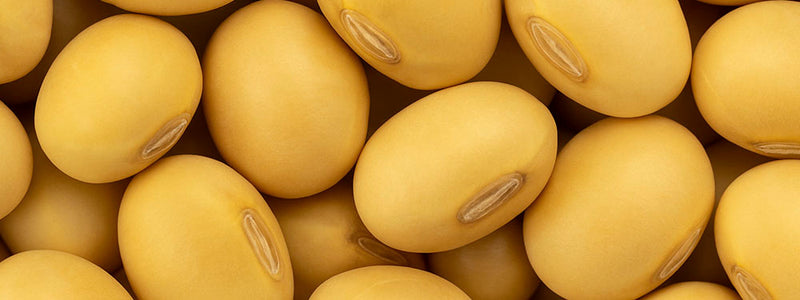
In Asian countries, where soy is an everyday food, people consume several tens of milligrams of isoflavones a day. That sparked interest in studying them during menopause.
What are soy isoflavones?
They are polyphenols found mainly in soy. The main ones are genistein, daidzein and glycitein. They belong to the phytoestrogen group.
How do they work?
They bind to oestrogen receptors, preferably the beta type, although with much lower potency than the body's own oestrogens. Part of the daidzein is converted in the gut into equol, a more active compound, but only in people whose gut microbiota can produce it.
What does the science say?
A meta-analysis of clinical trials found that soy isoflavones reduced the frequency and severity of hot flushes in menopausal women compared with placebo (Taku 2012). EFSA assessed their safety in 2015 and found no adverse effects on the breast, uterus or thyroid at the doses studied in peri- and postmenopausal women (EFSA 2015).
Isoflavones have no authorised health claims in the European Union.
Which foods contain isoflavones?
Soy and soy products: edamame, tofu, tempeh, miso and soy drink. Other legumes contain much smaller amounts.
Dose and how to take them
Studies usually use 40 to 100 mg of isoflavones a day for at least 12 weeks. At IVB, MenoMaster provides 80 mg of soy isoflavones together with sage, valerian, saffron and vitamins B2 and B6.
Safety
- They are usually well tolerated; they may cause mild digestive discomfort.
- If you have or have had a hormone-sensitive cancer, talk to your oncologist before taking them.
- If you take levothyroxine, keep doses at least 4 hours apart.
- They are not intended for pregnancy, breastfeeding or children. Avoid them if you are allergic to soy.
Frequently asked questions
What are soy isoflavones used for?
They are phytoestrogens that have been studied mainly during menopause, in relation to hot flushes. They have no authorised health claims in the EU.
Are isoflavones safe?
EFSA found no adverse effects in peri- and postmenopausal women at the doses studied. If you have a history of hormone-sensitive cancer, check with your specialist.
How long do isoflavones take to work?
Studies usually assess them after 6 to 12 weeks of daily use.
References
- Taku K, Melby MK, Kronenberg F, Kurzer MS, Messina M. Extracted or synthesized soybean isoflavones reduce menopausal hot flash frequency and severity: systematic review and meta-analysis of randomized controlled trials. Menopause. 2012;19(7):776-790.
- EFSA ANS Panel. Risk assessment for peri- and post-menopausal women taking food supplements containing isolated isoflavones. EFSA Journal. 2015;13(10):4246.