


All Episodes
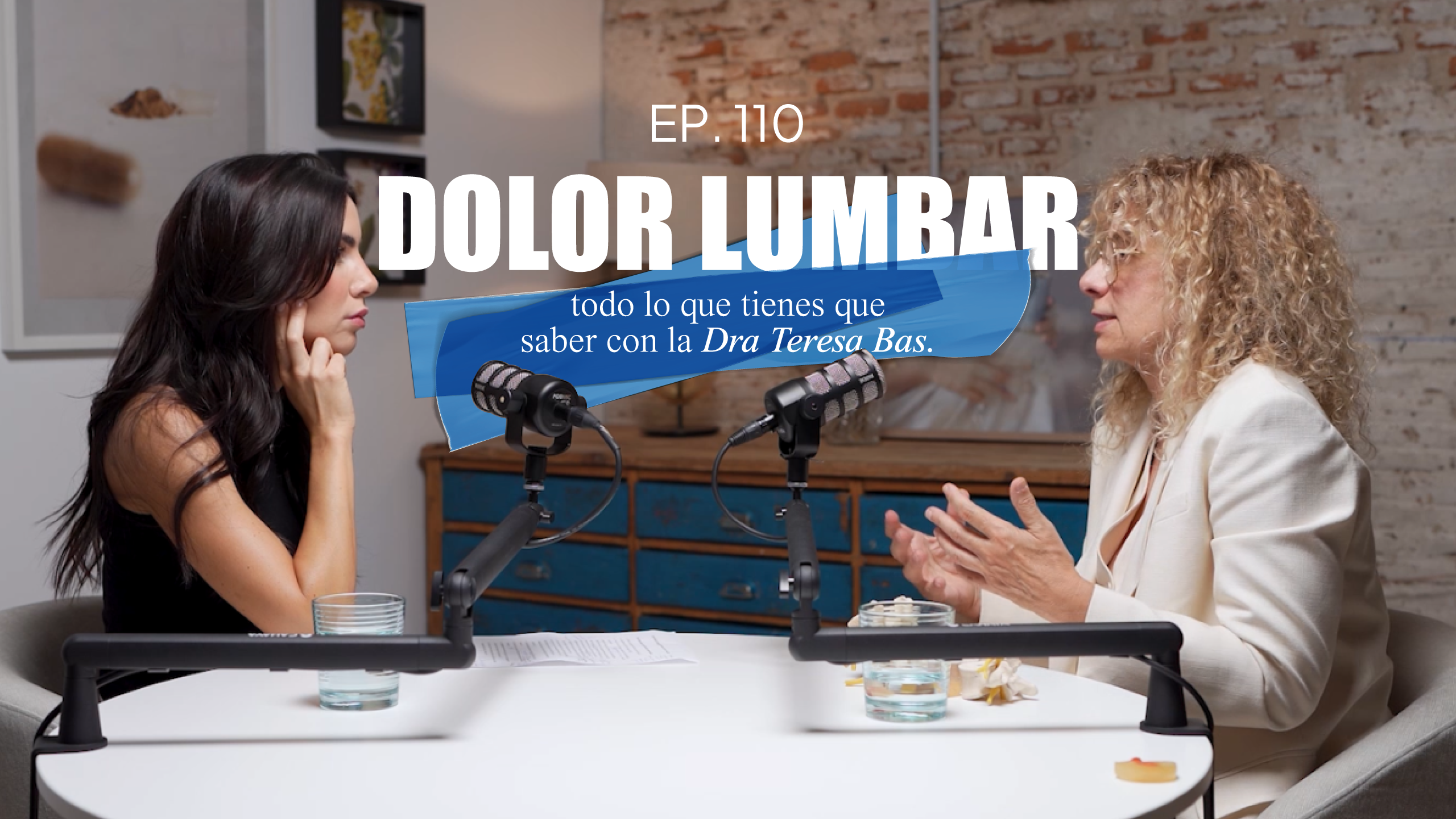
EP 110. Lumbar Pain with Dr. Teresa Bas.
Hellooooo:), welcome back to another episode of the podcast and the start of a new season, which comes with some very important new features: among them, the addition of video format and the presence of very special guests, both on a personal and professional level. And I think there could be no better person to accompany me at this beginning than Dr. Teresa Bas: spine surgeon, expert in the treatment of scoliosis in adults and children, head of the Spine Unit at the La Fe University Hospital in Valencia, associate professor at the University of Valencia and, also, my mother. In today's episode, we'll learn what lower back pain is, its various causes, what distinguishes it from sciatica, and how these problems are addressed medically and surgically. We'll also explore lifestyle changes and supplements that can help improve lower back pain, herniated discs, and sciatica, as well as the crucial role of exercise and nutrition in spinal health. And last but not least, we'll discuss the differences in spinal pathology between women and men. I hope you find it useful and learn a lot. My mother's Instagram handle is @dra.teresabas His private practice is Clinica Bas, located at Joaquin Costa 42 in Valencia, Spain. His work at the hospital is in the Spine Unit at the La Fe University and Polytechnic Hospital in Valencia, Spain. For more information, you know you can find me on Instagram @isabelvina where I share daily content. My TikTok @isabelvinabas On my YouTube channel And the supplements I've formulated are on my website . My website

EP 106: No Period and No Libido: The Hormonal Cost of Chronic Stress.
Hello :)In today's episode, I try to explain why chronic stress (both mental and physical) can directly affect our reproductive axis and, at the same time, indirectly affect other hormonal axes like the thyroid axis and prolactin, contributing to the worsening of stress-related reproductive symptoms by perpetuating the stress cycle --> lack of adequate GnRH synthesis --> FSH and LH --> regular menstruation, ovulation, testosterone production...I also talk about several supplements that ALWAYS follow lifestyle measures and do not replace them, which are:Stress: magnesium, omega 3, glycine, theanine, reishi, rhodiola, schisandra, ashwagandha, B vitamins like B12, B6, B9...Thyroid function: myo-inositol, CoQ10, selenium, iodine, vitamins B1 and B3..Prolactin: vitex agnus (chasteberry) and magnesiumI hope it's helpful :) a kissFor more information, you know you can find me on my Instagram @isabelvina where I share daily contentMy TikTok @isabelvinabasOn my YouTube channel https://www.youtube.com/channel/UC-dfdxLBcvfztBvRAKZSXGQAnd the supplements formulated by me https://ivbwellness.comFor more information, you know you can find me on my Instagram @isabelvina where I share daily contentMy TikTok @isabelvinabasOn my YouTube channel YouTube ChannelAnd the supplements formulated by me on my website My Website

EP 104. Aldosterone: The Hormone That Raises Your Blood Pressure.
Hello!!In today's podcast episode, I'm talking about hypertension, but not just any kind, rather the one associated with an excess of a little-known hormone: aldosterone.I'll explain what signs might indicate that our high blood pressure is due to an excess of this hormone.
How to assess it analytically, what tests would be necessary if blood tests reveal high aldosterone levels.
What specific treatments exist, what lifestyle measures to follow: how much fiber, exercise, salt, or potassium to consume…
Supplements that can help us, such as taurine, magnesium, olive leaf extract (standardized in oleuropein), hawthorn extract, or citrulline.
How to correctly measure blood pressure, and much more.
I hope you like it and, above all, find it useful : )For more information, you know you can find me on my Instagram @isabelvina where I share daily content.My TikTok @isabelvinabasOn my YouTube channel https://www.youtube.com/channel/UC-dfdxLBcvfztBvRAKZSXGQAnd the supplements formulated by me at https://ivbwellness.comFor more information, you know you can find me on my Instagram @isabelvina where I share daily content.My TikTok @isabelvinabasOn my YouTube channel YouTube ChannelAnd the supplements formulated by me on my website My website

EP 98. Osteoporosis: The Unknown Disease.
Hello :)In today's episode, I'll tell you why osteoporosis is a disease that begins to develop in childhood and goes unnoticed until it manifests with a fracture. That, in Spain, osteoporosis is responsible for 33 fragility fractures every hour and why everyone should know the importance of maintaining bone mass so that prevention becomes a reality.I also tell you which medications and diseases are associated with osteoporosis and therefore require special attention, emphasizing lifestyle measures such as strength and impact physical exercise, adequate nutrition, and cessation of toxic habits.How osteoporosis is diagnosed, even allowing you to assess your risk with the free and universal online tool FRAX (for each country)What supplementation measures can help usWhat medications are currently available, their pros and cons :)I hope you like it and, above all, learn something : )For more information, you know you can find me on my Instagram @isabelvina where I share daily contentMy TikTok @isabelvinabasOn my YouTube channel https://www.youtube.com/channel/UC-dfdxLBcvfztBvRAKZSXGQAnd the supplements formulated by me https://ivbwellness.comFor more information, you know you can find me on my Instagram @isabelvina where I share daily contentMy TikTok @isabelvinabasOn my YouTube channel YouTube ChannelAnd the supplements formulated by me on my website My website

EP 92. Alcohol: Why Drinking It Catches Up With You.
Hola :)In today's podcast, I'll answer your metabolic, hormonal, and general health questions about alcohol that you sent me on my Instagram @isabelvina.So, knowing that the best thing is not to consume alcohol, anything we reduce in our consumption is welcome, and here's why:I'll explain why alcohol causes various types of cancer.Why alcohol affects hormonal health in women and men, especially highlighting its negative role on the fundamental hormone for our health: testosterone.Why alcohol increases our fat stores.How much alcohol constitutes 1 unit of alcohol and whether wine and gin have the same negative effects.Whether alcohol used in cooking can have the same detrimental health effects.I hope the episode helps you know more, fear less, and choose better for your health.For more information, you know you can find me on my Instagram @isabelvina where I share daily content.My TikTok @isabelvinabasOn my YouTube channel https://www.youtube.com/channel/UC-dfdxLBcvfztBvRAKZSXGQAnd the supplements from my brand formulated by me https://ivbwellness.comFor more information, you know you can find me on my Instagram @isabelvina where I share daily content.My TikTok @isabelvinabasOn my YouTube channel YouTube ChannelAnd the supplements formulated by me on my website My Website

EP 78. Decoding Metabolism.
Hello!In today's podcast episode, I explain what components make up total energy expenditure, such as:-Basal metabolic rate-Energy expenditure associated with daily physical activities-Energy expenditure associated with physical exercise-Thermal effect associated with food-Adaptive thermogenesisAdditionally, I'll tell you which hormones influence basal metabolic rate and how we can optimize them if we wish.I hope you enjoy it :)For more information, you know you can find me on my Instagram @isabelvina where I share daily content.On my YouTube channel https://www.youtube.com/channel/UC-dfdxLBcvfztBvRAKZSXGQAnd the supplements formulated by me https://ivbwellness.comFor more information, you know you can find me on my Instagram @isabelvina where I share daily content.My TikTok @isabelvinabasOn my YouTube channel YouTube ChannelAnd the supplements formulated by me on my website My Website

EP 65. Creatine: Answers to the Most Common Questions.
Hello!In today's podcast, I'll answer all the questions that arose from episode 52 about creatine from my podcast (I encourage you to listen to it before this one if you haven't already).Among the questions I answer are: Can women take creatine?·
"Does creatine affect kidney function? My doctor told me to stop taking it because it raised my creatinine levels."· What is the best creatine?·
Does Creatine Break a Fast?·
Should I take creatine on an empty stomach?·
How to Store Creatine to Extend its Shelf Life·
Does creatine cause weight gain?·
Are creatine capsules effective?·
Can teenagers take creatine?·
What happens when you stop taking creatine?· Does creatine cause kidney stones?Can I take it if I have kidney stones?For more information, you know you can find me on my Instagram @isabelvina where I share daily content. On my YouTube channel https://www.youtube.com/channel/UC-dfdxLBcvfztBvRAKZSXGQ And the supplements formulated by me https://ivbwellness.comFor more information, you know you can find me on my Instagram @isabelvina where I share daily content.My TikTok @isabelvinabasOn my YouTube channel YouTube ChannelAnd the supplements formulated by me on my website My Website

EP 55. Sweeteners and Health: Myths and Realities.
!Hello! In this episode of our podcast, I want to tell you everything important that you need to know about non-caloric sweeteners and their role in our metabolic health and gut microbiota. So, I'm going to break down several scientific articles that have been misinterpreted and promoted on social media without detailed reading. We'll see how, many times, news related to sweeteners and metabolic health is manipulated. I'm going to explain these studies to you in detail, so that, with completely neutral information, you can decide which sweeteners to choose. Additionally, I'll tell you which sweeteners currently have a neutral impact on our metabolism and microbiota.Furthermore, I'll briefly compare non-caloric sweeteners, which are often demonized on social media, with other caloric sweeteners, such as honey or date paste, which are often presented as a better alternative to table sugar. We'll see that this isn't entirely true, as each type of sweetener has its advantages and disadvantages.I believe it's crucial for you to know these points to make an informed decision if you wish to sweeten your food or drinks and avoid falling into the vortex of misinformation that the world of social media often represents. Studies I refer to
Méndez-García LA, Bueno-Hernández N, Cid-Soto MA, et al. Ten-Week Sucralose Consumption Induces Gut Dysbiosis and Altered Glucose and Insulin Levels in Healthy Young Adults. Microorganisms. 2022;10(2):434
McGlynn ND, Khan TA, Wang L, et al. Association of Low- and No-Calorie Sweetened Beverages as a Replacement for Sugar-Sweetened Beverages With Body Weight and Cardiometabolic Risk: A Systematic Review and Meta-analysis. JAMA Netw Open. 2022;5(3).
Witkowski M, Nemet I, Alamri H, et al. The artificial sweetener erythritol and cardiovascular event risk. Nat Med. 2023;29(3):710-718
Studies proving the safety, metabolic neutrality, and gut microbiota neutrality of non-caloric sweeteners:
McGlynn ND, Khan TA, Wang L, et al. Association of Low- and No-Calorie Sweetened Beverages as a Replacement for Sugar-Sweetened Beverages With Body Weight and Cardiometabolic Risk: A Systematic Review and Meta-analysis. JAMA Netw Open. 2022;5(3).
Lohner S, Toews I, Meerpohl JJ. Health outcomes of non-nutritive sweeteners: analysis of the research landscape. Nutr J. 2017;16(1):55, 2017.
Toews I, Lohner S, Küllenberg de Gaudry D, Sommer H, Meerpohl JJ. Association between intake of non-sugar sweeteners and health outcomes: systematic review and meta-analyses of randomised and non-randomised controlled trials and observational studies [published correction appears in BMJ. 2019 Jan 15;364:l156]. BMJ. 2019.
Nichol, A. D., Holle, M. J., & An, R, et al. Glycemic impact of non-nutritive sweeteners: a systematic review and meta-analysis of randomized controlled trials. European journal of clinical nutrition, 72(6), 796–804, 2018. Tey SL, Salleh NB, Henry CJ, Forde CG. Effects of non-nutritive (artificial vs natural) sweeteners on 24-h glucose profiles. Eur J Clin Nutr. 2017.
Tucker RM, Tan SY. Do non-nutritive sweeteners influence acute glucose homeostasis in humans? A systematic review. Physiol Behav. 2017.
Ahmad SY, Azad MB, Friel J, MacKay D. Recent evidence for the effects of nonnutritive sweeteners on glycaemic control. Curr Opin Clin Nutr Metab Care. 2019.
Ahmad, S. Y., Friel, J., & Mackay, D.. The Effects of Non-Nutritive Artificial Sweeteners, Aspartame and Sucralose, on the Gut Microbiome in Healthy Adults: Secondary Outcomes of a Randomized Double-Blinded Crossover Clinical Trial. Nutrients, 12(11), 3408, 2020.
Thomson, P., Santibañez, R., Aguirre, C., Galgani, J. E., & Garrido, D. Short-term impact of sucralose consumption on the metabolic response and gut microbiome of healthy adults. The British journal of nutrition, 122(8), 856–862, 2019.
For more information, you know you can find me on my Instagram @isabelvina where I share daily content On my YouTube channel https://www.youtube.com/channel/UC-dfdxLBcvfztBvRAKZSXGQAnd the supplements formulated by me https://ivbwellness.comFor more information, you know you can find me on my Instagram @isabelvina where I share daily content My TikTok @isabelvinabasOn my YouTube channel YouTube ChannelAnd the supplements formulated by me on my website My website

EP 54. Strong Defenses: Immunity, Allergies, and Supplements.
On today's podcast, I'll explain what the immune system is, how it's organized, and how we can generally optimize its function with certain supplements.I'll also discuss the immunological mechanism by which certain people develop allergies and how to use certain supplements to reduce allergy-related symptoms and even potentially reduce the need for antihistamines and corticosteroids.Supplements to optimize immunity: Vitamin C, Vitamin D3K2 (you can find these in my supplement brand, the link is at the end of the description), zinc, colostrum, elderberry, echinacea, Reishi, and Cordyceps.To improve allergy symptoms: Sun mushroom (Agaricus Blazei), quercetin, and butterbur extract.For more information, you know you can find me on my Instagram @isabelvina where I share daily content.On my YouTube channel https://www.youtube.com/channel/UC-dfdxLBcvfztBvRAKZSXGQAnd my formulated supplements at https://ivbwellness.comFor more information, you know you can find me on my Instagram @isabelvina where I share daily content.My TikTok @isabelvinabasOn my YouTube channel YouTube ChannelAnd my formulated supplements on my website My Website

EP 47. Antioxidants: Everything You Need to Know.
Hello!!In today's episode, I'm breaking down everything related to oxidation, free radical formation, and chronic low-grade inflammation.Why having an oxidation/reduction balance is keyWhy our antioxidant defenses are currently overwhelmed by oxidizing agents.In which diseases oxidation and chronic low-grade inflammation play a key role.What antioxidants are available, where they act, and how to combine themFor more information, you know you can find me on my Instagram @isabelvina where I share daily contentOn my YouTube channel https://www.youtube.com/channel/UC-dfdxLBcvfztBvRAKZSXGQAnd the supplements formulated by me https://ivbwellness.com See you in 2 Saturdays :) For more information, you know you can find me on my Instagram @isabelvina where I share daily contentMy TikTok @isabelvinabasOn my YouTube channel YouTube ChannelAnd the supplements formulated by me on my website My website

EP 41. Constipation: Hormones, Fiber, and Solutions.
Constipation: Remedies, Hormones, and Fibers to Restore Your Bowel Transit
Hello, I am Dr. Isabel Viña Bas, a physician and Scientific Director of IVB Wellness Lab. There are few things that cause as much daily frustration as feeling like your gut has come to a standstill.You start counting the days, trying seeds, herbal teas, or laxatives, and thinking that if you don't go to the bathroom every day, something is wrong.
But the gut is not a Swiss watch, and there is no perfect frequency that everyone must meet.The important thing is not to compare yourself to anyone, but to recognize your usual rhythm and detect when it has changed without a clear explanation.
Furthermore, constipation does not depend solely on eating more fiber. To move more than eight meters of intestine, you need active thyroid hormones, water, food volume, physical movement, and a nervous system that doesn't think we are living in danger. Understanding these pieces is what allows you to stop accumulating random remedies and start acting with criteria.
When do we talk about constipation and when is your rhythm normal?
Medically, the normal range is much wider than we usually imagine. One person can go to the bathroom up to three times a day (21 times per week) and another only three times per week.If that has always been their rhythm and there is no pain, bloating, or difficulty, both can be perfectly healthy.
That is why we should not diagnose constipation by looking only at the calendar.The real warning sign is a sudden change from your usual pattern without an obvious trigger. For example, going from going daily to doing it once a week without changing your diet, starting a medication, or going on a trip.
In that case, it is not time to normalize it or cover it up indefinitely with laxatives.It is time to consult with a digestive system specialist to understand what has changed and why.
Thyroid and constipation: the hormone that moves eight meters of intestine
For intestinal content to advance, the musculature of the entire digestive tract must contract in a coordinated manner.And for that contraction to occur, we need an adequate amount of active thyroid hormone.
When there is hypothyroidism, everything goes slower, including the gut. In hyperthyroidism, the opposite happens, and the frequency of bowel movements can skyrocket, and diarrhea may even appear.The speed of your gut closely follows your thyroid.
There is an important nuance here. Many people take levothyroxine, which provides inactive T4 hormone, and remain constipated. The reason may be that this T4 is not converted well into active T3 within the intestinal cells.It's like having fuel stored but not being able to start the engine.
In the episode, I explain that I have seen many patients' transit improve by optimizing that thyroid function. That is why we formulated TyroEnergy as support for thyroid activation and function.It is not about using it as a laxative, but about working on one of the hormonal causes that may be slowing down the gut.
Progesterone, period, and stress: why your transit changes during the month
The gut also responds to the hormones of the menstrual cycle. After ovulation, more or less between days 14 and 27, progesterone rises. Its function is to relax the musculature and prepare the body, but that relaxation does not happen only in the uterus: it also reaches the gut.The progesterone that relaxes the uterus also slows down transit.
That is why many women notice that, in the second half of the cycle, transit slows down and constipation appears. Just before the period, progesterone drops suddenly, and the opposite can happen: sudden diarrhea.These are not two different problems: it is the same gut responding to two hormonal moments.
Stress also hits the brakes. Adrenaline and noradrenaline act in the face of immediate danger, and cortisol maintains the response when stress is prolonged. It has complete evolutionary logic: if you are fleeing a threat, missing a flight, or about to get married, your body understands that it is not the time to have a bowel movement.Under stress, the gut receives the order to wait.
The problem comes when that alert becomes your usual state.The gut receives the order to wait every day, even if you are just sitting in front of the computer.
Eating very little also causes constipation: without volume, there is nothing to push
One of the most frequent mistakes is trying to solve constipation while following a very restrictive diet. If you eat a volume equivalent to a yogurt lid and your diet is based almost only on protein and fat, the gut does not have enough mass with which to form stool.
This is common in keto or very low-carb diets. In addition to reducing fecal volume, restricting carbohydrates too much can lower insulin sensitivity and reduce thyroid function in just 72 hours, and that slows down transit again.Removing too many carbohydrates also slows down the gut.
Constipation does not always mean you need to add something.Sometimes it means you have removed too much: food, carbohydrates, fiber, and volume.
Water and movement: two remedies for constipation that we underestimate
Fiber without water cannot do its job. If you drink little, food becomes a dry lump that the gut can barely transport along its more than eight meters.Without water, fiber gets stuck instead of helping.
In people who use injectable drugs to lose weight and have nausea, I recommend spreading out water intake before or after meals instead of drinking a lot while eating.The goal remains to hydrate the intestinal content without worsening the feeling of fullness.
And then there is gravity. The mouth is above the anus for a very practical reason: the body is made to move vertically.Spending all day sitting makes the colon sedentary as well.
I always tell the story of my grandfather Pepe, who at 94 walks ten times a day down the hallway, five in the morning and five in the afternoon. It seems like a minimal gesture, but that movement keeps his bones and gut active, and prevents urine and pulmonary mucus from stagnating, something key at that age to prevent urinary infections and pneumonia.Small, repeated movement is medicine for the gut.
You don't need to go out and run ten kilometers.For an immobile gut, getting up and walking several times a day is already a powerful biological signal.
Soluble and insoluble fiber: the sponge and the brush of your gut
Talking about fiber as if it were one thing causes a lot of confusion.In reality, there are two main types, and each fulfills a different function.
Soluble fiber: the sponge. It dissolves in water and forms a viscous gel. That gel increases stool volume, helps drag heavy metals, and contributes to lowering cholesterol and sugar. We find it in oats, especially for their beta-glucans, in legumes, apples, and carrots.
Within soluble fiber, there is a fermentable part, such as the inulin in garlic, onion, and leek, or FOS. This feeds the microbiota, which produces short-chain fatty acids with anti-inflammatory action.It is very beneficial, but in sensitive people, it can cause gas and bloating.
There is also non-fermentable soluble fiber. It makes the same gel, but bacteria do not use it, so it is usually better tolerated when there is irritable bowel.The most useful example is psyllium husk or plantago, with a suggested dose of 10 to 20 grams per day.
Insoluble fiber: the brush. It does not dissolve in water. It advances through the gut, sweeping and rubbing its walls, which helps push the fecal mass downward. We find it in wheat bran, broccoli, and fruit peels.
One is not better than the other. The sponge provides volume and water; the brush provides dragging.Knowing what you need avoids swallowing large amounts of a fiber that perhaps only bloats you without solving the problem.
Chia and flax for constipation: how to take them so they work
Seeds can be a simple tool, but how you take them completely changes their effect.With chia and flax, the how matters as much as the what.
Flax or linseed. When it is ground, it is digested and loses much of its mechanical function as fiber. If what you are looking for is to promote transit, in the episode I recommend taking it whole, so that it acts as a small brush of non-fermentable insoluble fiber.
Chia. If you leave it hydrating all night, it swells outside the body and part of the effect has already occurred before taking it. To use it as occasional support for transit, I explain a very specific guideline: take a tablespoon of dry chia and drink a glass of water right after. This way, it forms the sponge inside the gut.
Here, water is not optional.Taking dry seeds without enough liquid goes directly against the goal.
Why should laxatives with senna or bisacodyl not be a routine?
When you haven't gone to the bathroom for several days, a stimulant laxative seems like the quick fix. The problem is that the gut learns. Products with senna leaves, bisacodyl (like Dulcolax), or sodium picosulfate force the contraction of the intestinal wall, but their regular use generates tolerance, dependence, dehydration, and rebound constipation.The quick stimulant laxative, used daily, ends up ruining the gut it wanted to help.
During my shifts at the hospital, I treated two women with severe cardiac arrhythmias caused by hypokalemia, that is, a drastic drop in blood potassium.In both cases, the continued consumption of food supplements with senna leaves was behind it.
Potassium is essential for the heart to maintain its rhythm. Losing it over and over again due to the laxative effect is not a minor digestive annoyance.It can become a medical emergency.
That is why these stimulant laxatives should be reserved for one or two specific days.They are not the tea to go to the bathroom every night.
Probiotics for transit: the strain matters, not just the name
When we choose a probiotic, saying it contains Lactobacillus is not enough. The genus is the name, but the strain is the surname and determines what specific function it can fulfill.In probiotics, the surname changes everything.
To help regulate transit, in the episode I recommend looking for Lactobacillus reuteri DSM 17938 and Bifidobacterium lactis.The regimen must be maintained for at least three to four months to give time to restore the intestinal flora.
I also advise against buying probiotics mixed inside a multivitamin. The minerals in the same capsule can damage the bacteria before they reach the gut.A formula with many ingredients is not always a better formula.
Three safe options for chronic constipation without dependence
When diet, water, movement, and fiber are not enough, there are alternatives that can be used chronically without the tolerance, dehydration, or electrolyte alterations of stimulant laxatives.For chronic constipation, the key is to choose options that do not force the gut to contract by force.
Lactulose. It is an osmotic laxative derived from galactose and fructose. It attracts water to the gut to soften and increase stool volume. The dose in the episode is 5 to 10 grams per day in syrup.
Lactitol. It also acts by osmosis and is derived from lactose, although it can be used in intolerant people. The regimen is also 5 to 10 grams per day.
Liquid paraffin. It is a mineral oil that lubricates the colon, like an oral suppository. A tablespoon can be taken in the morning and another at night. Its drawback is that it can drag and reduce the absorption of fat-soluble vitamins A, D, E, and K.
These options can be combined, for example, lactulose in the morning and paraffin at night.And an important check: always check the syrup label at the pharmacy to make sure it does not contain added sugar or fructose.
How to choose the remedy for constipation without living from trial to trial?
Before buying another product, go back to the beginning. Ask yourself if your frequency has really changed, if you eat enough volume, how much water you drink, how much you move, and what point of the cycle you are in. Also check if there are symptoms of hypothyroidism or if stress keeps your body on alert.Most of the time, the clue is in one of these pieces, not in a new product.
Then choose the tool according to the problem. If volume is missing, you need food and fiber. If fermentable fibers bloat you, psyllium fits better. If the content is dry, you need water. If the colon has been sitting all day, you need to walk.And if the constipation is new and sudden, what you need is a medical assessment.
If you need continued support, prioritize osmotic or lubricant options, which do not force the gut. The goal is not a spectacular bowel movement tomorrow, but to recover a bowel transit that is sustained without dependence and without putting your fluid and mineral balance at risk.We are looking for stable regularity, not a shock effect.
Transforming your health is a matter of applying science with consistency, day by day.You have in your hands the knowledge to understand why your gut has slowed down and choose solutions that accompany it, instead of punishing it.
Author: Dr. Isabel Viña Bas
I hope you like it :)For more information, you know you have me on my Instagram @isabelvina where I share daily content My TikTok @isabelvinabasOn my YouTube channel YouTube ChannelAnd the supplements formulated by me on my website My website

EP 40. Acne and Hormones: Beyond Conventional Treatments.
In today's episode, we're going to delve into the world of acne so that, by the end of the podcast, you'll know everything you need to fear less and make better choices. Among other things I will tell you: What is acne and why does it occur? Understanding the vicious cycle of follicular obstruction, bacterial proliferation, and inflammatory response. I will explain and delve deeper into how hormones such as androgens, estrogens, glucocorticoids, insulin, and thyroid hormones play a key role in cell renewal, sebogenesis, and skin health. Why chronic use of contraceptives is not a definitive solution for acne and what non-hormonal options may be available for managing acne. The future of topical acne treatments: the use and mechanism of action of topical CBD I hope you enjoy it, and remember to rate my podcast and follow me on Instagram @isabelvina for more daily information about hormones, metabolism, and everything related to medicine that you need to know more and make better choices. For more information, you know you can find me on Instagram @isabelvina where I share daily content. My TikTok @isabelvinabas On my YouTube channel And the supplements I've formulated are on my website . My website