


Omega-3: real benefits, sources and how to choose according to goals (EPA, DHA and ALA)
Want to understand omega-3 clearly and based on science?
In this article, you will understand what are they omega-3 fatty acids (EPA, DHA, and ALA), how they act in the body and what does the evidence in different key contexts: cardiovascular health, mental health, pregnancy and lactation, male fertility, and vegetarian or vegan diets.
We will close with fonts dietary, plant-based alternatives such as algae oil, criteria quality when choosing a supplement and practical conclusions ...so you know when to prioritize EPA, DHA, or ALA depending on your goals and diet.
What is omega-3, how does it work, and what are its potential benefits?
The omega-3 they are a "good" type of fat that our body needs but does not produce in sufficient quantities, so we must obtain them from our diet. The most important are:
-
EPA: ayuda a controlar la inflamación en el cuerpo. Está relacionado con beneficios en la salud del corazón y, en algunos estudios, con apoyo en problemas de ánimo como ansiedad o depresión.
-
DHA: es un “ladrillo” esencial en la construcción del cerebro y la retina. Participa en la comunicación entre las neuronas y en la visión, y tiene un papel clave en el embarazo, la lactancia y la fertilidad masculina.
-
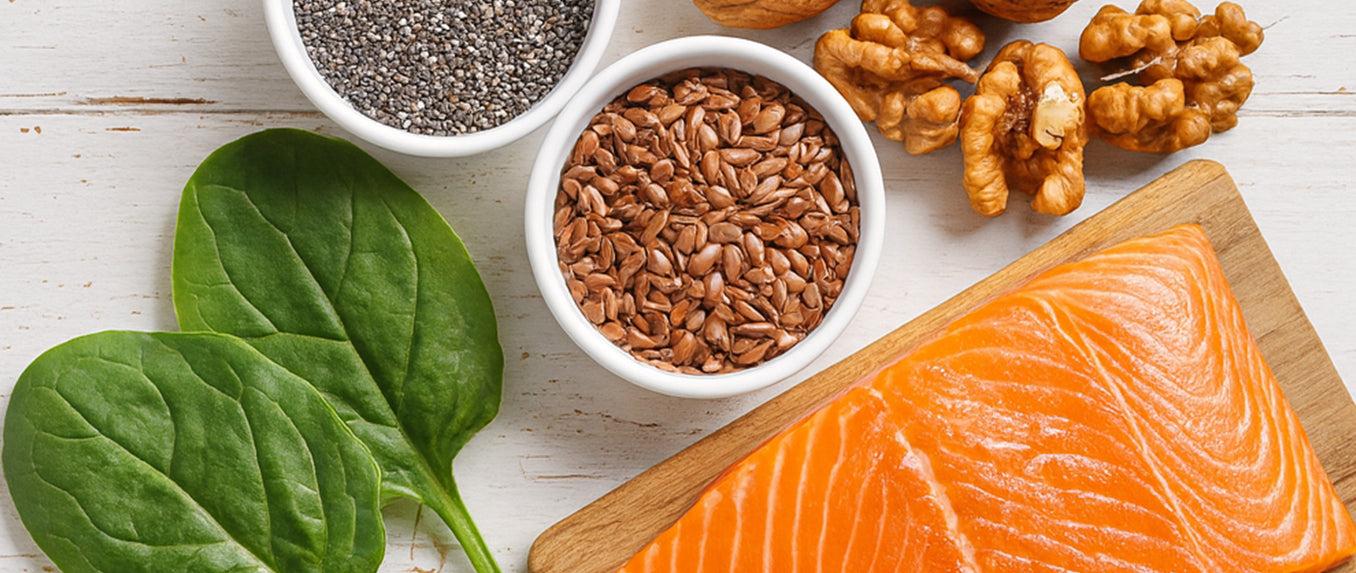
ALA: se encuentra en alimentos vegetales como lino, chía o nueces. Nuestro cuerpo puede transformarlo en EPA y un poco en DHA, aunque esta conversión es limitada.

What does science say? What is it used for?
Cardiovascular health
In people with high triglycerides on cholesterol medication help improve lipid profiles and reduce triglycerides, thus helping to maintain good cardiovascular health (Mozaffarian & Wu, 2011).
Mental health
Scientific reviews show that the effect of omega-3s on depression is modest yet realistic additional support, especialmente cuando el suplemento contiene más EPA que DHA.
modulation of inflammation and neuronal functionl, aunque los resultados clínicos siguen siendo moderados (Appleton et al., 2021; Su et al., 2018).
Pregnancy and breastfeeding
Increase the consumption of EPA and DHA during pregnancy can reduce the risk of premature birth, y por ello se recomienda que las gestantes y mujeres lactantes cubran bien sus necesidades de DHA (Middleton et al., 2018; Best et al., 2022).
Male fertility
DHA is essential on sperm membranes. Men who consume more omega-3 have shown better semen quality in some studies, and reviews suggest improvements in sperm motility, although larger trials are still needed (Jensen et al., 2020; Hosseini et al., 2019)
Vegetarians and vegans
ALA, is present in foods such as flaxseed, chia, or walnuts. The body can convert it into EPA and, to a lesser extent, DHA, but this process is not very efficient.
The reason is that the conversion requires several enzymes that also participate in other fat metabolic pathways, meaning only a small portion of ALA is actually converted. In most people, this percentage is around 5%–10% for EPA and less than 1% for DHA (Burdge & Wootton, 2002; Brenna et al., 2009).
although a diet rich in ALA contributes to cardiovascular health, is usually not enough to cover the structural functions of DHA, essential for brain, vision, and fertility.
In vegetarians and vegans, a slight metabolic adaptation may occur: their bodies convert slightly more ALA into EPA, but DHA levels remain low (Rosell et al., 2005). Sanders (2009) confirms this trend and highlights that the algae oil is the most effective and direct way to meet DHA requirements without relying on animal sources (Arterburn et al., 2008).

What to look for when choosing a high-quality omega-3?
If you choose to take an omega-3 supplement, there are several aspects to keep in mind:
-
Chemical form: los omega-3 pueden presentarse como triglicéridos naturales, etil ésteres o carboxilatos. Todas son formas válidas y absorbibles, pero los triglicéridos suelen mostrar una biodisponibilidad algo mayor.
-
Actual EPA and DHA content: what matters is the exact amount of EPA and DHA per capsule, not the total milligrams of "fish oil" or "algae oil."
-
Purity and contaminants: un omega-3 de calidad debe estar libre de metales pesados, dioxinas y PCB.
-
Oxidation: fatty acids are highly sensitive; therefore, the product should incorporate natural antioxidants and be stored under appropriate conditions.
-
Quality certifications: sellos como IFOS (International Fish Oil Standards) y IAOS (International Algal Oil Standards) y la organización GOED (Global Organization for EPA and DHA Omega-3s) garantizan pureza y trazabilidad.
Specific certifications in algae oils
In the case of plant-based omega-3, in addition to purity seals, you can find certifications that guarantee its vegan status and sustainability:
-
V-Label: muy reconocido en Europa, avala que el producto es 100 % libre de ingredientes animales.
-
The Vegan Society Trademark: sello británico con presencia internacional que certifica productos veganos en composición y procesado.
-
Non-GMO Project Verified: guarantees the absence of genetically modified organisms, which are common in algae oils from the US.
-
USP or NSF: certificaciones de laboratorios independientes que validan potencia, pureza y buenas prácticas de fabricación.

Conclusions
EPA, DHA and ALA comply distinct and complementary functions. EPA stands out for inflammation, cardiovascular risk, and anxiety-depressive symptoms; DHA is essential for the brain, vision, and male fertility; ALA contributes to cardiometabolic health, but does not cover the functions of DHA on its own.
En vegetarians and veganss metabolic adaptation slightly improves ALA conversion, but not enough algae oil constituye la mejor opción para garantizar niveles adecuados de DHA.
Finally, it is very important to know how to choose a high-quality omega-3: it is advisable to look at the chemical form, the actual EPA and DHA content, the purity, the protection against oxidation, and the presence of reliable certifications that guarantee its safety and sustainability.
consult with a professional health who can guide you in your particular case.
References
-
Appleton KM, Voyias PD, Sallis HM, Dawson S, Ness AR, Churchill R, Perry R. Omega-3 fatty acids for depression in adults. Cochrane Database Syst Rev. 2021 Nov 24;11(11):CD004692. doi: 10.1002/14651858.CD004692.pub5. PMID: 34817851; PMCID: PMC8612309.
-
Arterburn LM, Oken HA, Bailey Hall E, Hamersley J, Kuratko CN, Hoffman JP. Algal-oil capsules and cooked salmon: nutritionally equivalent sources of docosahexaenoic acid. J Am Diet Assoc. 2008 Jul;108(7):1204-9. doi: 10.1016/j.jada.2008.04.020. PMID: 18589030.
-
Best KP, Gold M, Kennedy D, Martin J, Makrides M. Omega-3 long-chain PUFA intake during pregnancy and allergic disease outcomes in the offspring: a systematic review and meta-analysis of observational studies and randomized controlled trials. Am J Clin Nutr. 2016 Jan;103(1):128-43. doi: 10.3945/ajcn.115.111104. Epub 2015 Dec 16. PMID: 26675770.
-
Bhatt DL, Steg PG, Miller M, Brinton EA, Jacobson TA, Ketchum SB, Doyle RT Jr, Juliano RA, Jiao L, Granowitz C, Tardif JC, Ballantyne CM; REDUCE-IT Investigators. Cardiovascular Risk Reduction with Icosapent Ethyl for Hypertriglyceridemia. N Engl J Med. 2019 Jan 3;380(1):11-22. doi: 10.1056/NEJMoa1812792. Epub 2018 Nov 10. PMID: 30415628.
-
Brenna JT, Salem N Jr, Sinclair AJ, Cunnane SC; International Society for the Study of Fatty Acids and Lipids, ISSFAL. alpha-Linolenic acid supplementation and conversion to n-3 long-chain polyunsaturated fatty acids in humans. Prostaglandins Leukot Essent Fatty Acids. 2009 Feb-Mar;80(2-3):85-91. doi: 10.1016/j.plefa.2009.01.004. Epub 2009 Mar 9. PMID: 19269799.
-
Burdge GC, Wootton SA. Conversion of alpha-linolenic acid to eicosapentaenoic, docosapentaenoic and docosahexaenoic acids in young women. Br J Nutr. 2002 Oct;88(4):411-20. doi: 10.1079/BJN2002689. PMID: 12323090.
-
Hosseini B, Nourmohamadi M, Hajipour S, Taghizadeh M, Asemi Z, Keshavarz SA, Jafarnejad S. The Effect of Omega-3 Fatty Acids, EPA, and/or DHA on Male Infertility: A Systematic Review and Meta-analysis. J Diet Suppl. 2019;16(2):245-256. doi: 10.1080/19390211.2018.1431753. Epub 2018 Feb 16. PMID: 29451828.
-
Innis SM. Dietary (n-3) fatty acids and brain development. J Nutr. 2007 Apr;137(4):855-9. doi: 10.1093/jn/137.4.855. PMID: 17374644.
-
Jensen TK, Priskorn L, Holmboe SA, Nassan FL, Andersson AM, Dalgård C, Petersen JH, Chavarro JE, Jørgensen N. Associations of Fish Oil Supplement Use With Testicular Function in Young Men. JAMA Netw Open. 2020 Jan 3;3(1):e1919462. doi: 10.1001/jamanetworkopen.2019.19462. PMID: 31951274; PMCID: PMC6991322.
-
Middleton P, Gomersall JC, Gould JF, Shepherd E, Olsen SF, Makrides M. Omega-3 fatty acid addition during pregnancy. Cochrane Database Syst Rev. 2018 Nov 15;11(11):CD003402. doi: 10.1002/14651858.CD003402.pub3. PMID: 30480773; PMCID: PMC6516961.
-
Mozaffarian D, Wu JH. Omega-3 fatty acids and cardiovascular disease: effects on risk factors, molecular pathways, and clinical events. J Am Coll Cardiol. 2011 Nov 8;58(20):2047-67. doi: 10.1016/j.jacc.2011.06.063. PMID: 22051327.
-
Rosell MS, Lloyd-Wright Z, Appleby PN, Sanders TA, Allen NE, Key TJ. Long-chain n-3 polyunsaturated fatty acids in plasma in British meat-eating, vegetarian, and vegan men. Am J Clin Nutr. 2005 Aug;82(2):327-34. doi: 10.1093/ajcn.82.2.327. PMID: 16087975.
-
Sanders TA. DHA status of vegetarians. Prostaglandins Leukot Essent Fatty Acids. 2009 Aug-Sep;81(2-3):137-41. doi: 10.1016/j.plefa.2009.05.013. Epub 2009 Jun 4. PMID: 19500961.
-
Su KP, Tseng PT, Lin PY, Okubo R, Chen TY, Chen YW, Matsuoka YJ. Association of Use of Omega-3 Polyunsaturated Fatty Acids With Changes in Severity of Anxiety Symptoms: A Systematic Review and Meta-analysis. JAMA Netw Open. 2018 Sep 7;1(5):e182327. doi: 10.1001/jamanetworkopen.2018.2327. PMID: 30646157; PMCID: PMC6324500.
Read more
-
 Reading time: 420 segundos
Vuelta a la rutina: cómo recuperar tus hábitos saludables tras el verano
Volver de vacaciones no significa tener que empezar de cero Durante el verano es habitual que cambien los horarios, que comamos más veces fuera de casa, que entrenemos de otra manera o que nos acostemos más tarde. Y no pasa nada. De hecho, aprender a adaptar nuestros hábitos a diferentes momentos y circunstancias también forma parte de un estilo de vida saludable. El problema suele aparecer cuando septiembre llega acompañado de la sensación de que hay que “compensar” todo lo que se ha hecho durante las vacaciones: volver al gimnasio cinco días de golpe, empezar una dieta mucho más restrictiva, eliminar determinados alimentos o pretender recuperar todos los horarios en 24 horas. Y probablemente no sea necesario hacer nada de eso. La vuelta a la rutina puede ser simplemente eso: volver, poco a poco, a aquellos hábitos que sabemos que nos ayudan a sentirnos bien. Alimentación, descanso, movimiento y organización son algunos de los pilares que pueden facilitar esa transición. En este artículo repasamos cómo recuperar una rutina saludable después del verano de una forma progresiva, realista y, sobre todo, sostenible. Vuelta a la rutina alimentaria tras el verano Después de varias semanas con horarios diferentes, viajes, comidas fuera de casa y más improvisación, uno de los primeros hábitos que puede ayudar a recuperar cierta sensación de rutina es volver a organizar la alimentación. No porque durante las vacaciones se haya comido “mal” y ahora haya que hacerlo “bien”, sino porque tener cierta estructura facilita mucho el día a día. Volver a hacer la compra, recuperar algunos horarios, preparar ciertas comidas con antelación o simplemente volver a tener alimentos básicos en casa puede marcar una diferencia enorme. Cómo planificar la semana sin depender de la improvisación Planificar no significa saber exactamente qué se va a comer cada día de la semana. Una planificación flexible puede ser suficiente. Por ejemplo, antes de hacer la compra puede resultar útil pensar en: 2-3 fuentes de proteína: huevos, pescado, pollo, tofu, legumbres… Diferentes verduras y hortalizas. Fruta de temporada. Fuentes de hidratos de carbono como patata, boniato, arroz, quinoa, pan o cereales integrales. Grasas saludables como aceite de oliva virgen extra, frutos secos, semillas o aguacate. Algunos recursos rápidos para los días con menos tiempo: legumbres cocidas, conservas de pescado, verduras congeladas, huevos cocidos, gazpacho o cremas de verduras. A partir de ahí, esos alimentos pueden combinarse de distintas formas durante la semana sin necesidad de seguir un menú rígido. También puede ser útil cocinar alguna cantidad extra. Preparar más verduras, arroz, patata o una fuente de proteína permite tener parte de la siguiente comida solucionada. Consejo de Teresa: Una de las cosas que más me ayuda cuando vuelvo de vacaciones es hacer una compra bastante básica y llenar de nuevo la nevera de alimentos que me ponen las cosas fáciles. No hace falta hacer un meal prep de tres horas: muchas veces, tener buenos básicos disponibles ya cambia por completo la semana. Recuperar horarios de comida regulares Durante las vacaciones también suelen cambiar nuestros horarios. Desayunamos más tarde, comemos a otra hora o cenamos cuando surge. Al volver a la rutina, recuperar cierta regularidad puede ayudar a volver a organizar el día y nuestras comidas. Eso no significa que todo el mundo deba desayunar a las 8:00, comer a las 14:00 y cenar a las 21:00. No existe un horario perfecto universal. Lo importante es encontrar una estructura que encaje con las necesidades, el trabajo, el entrenamiento, el descanso y las señales de hambre y saciedad de cada persona. ¿Por qué cuesta tanto volver a la rutina? Después de varias semanas con horarios diferentes, más vida social, viajes y cambios en la alimentación, el descanso o el ejercicio, es normal necesitar unos días para volver a adaptarse. Esta dificultad temporal para volver a adaptarnos a los horarios y obligaciones habituales se conoce popularmente como “síndrome postvacacional” y puede ir acompañada de cansancio, apatía, irritabilidad, dificultad para concentrarse o cambios en el sueño. La buena noticia es que suele mejorar a medida que recuperamos cierta regularidad. Y no se trata de volver a ser quien eras antes del verano, sino de recuperar una rutina que sea compatible con tu vida actual. El error de querer recuperarlo todo en un solo día Septiembre es como empezar un nuevo año. De repente aparecen las ganas de organizarse, comer mejor, entrenar más, dormir ocho horas, preparar todos los tuppers de la semana y recuperar en unos días cualquier hábito que se haya relajado durante las vacaciones. Sin embargo, intentar modificar demasiadas cosas a la vez suele dificultar que los cambios se mantengan. Una estrategia más realista consiste en identificar qué dos o tres hábitos tienen mayor impacto en el día a día y empezar por ellos. Puede ser volver a acostarse un poco antes, preparar la comida para llevar al trabajo o recuperar tres sesiones de entrenamiento a la semana. Cuando esos hábitos vuelvan a formar parte de la rutina, se pueden ir incorporando otros. Consejo de Teresa: Yo intentaría no convertir septiembre en un castigo por haber disfrutado agosto. No necesitas compensar las vacaciones ni demostrar nada durante la primera semana. Simplemente vuelve poco a poco a las cosas que sabes que te hacen sentir bien. Recupera tus horarios de sueño poco a poco El sueño suele ser otro de los grandes cambios del verano. Los días son más largos, hacemos más planes por la noche, cenamos más tarde y muchas veces también cambia la hora a la que nos levantamos. Por eso, pretender acostarse de repente dos horas antes y dormir perfectamente desde la primera noche puede no ser demasiado realista. Cómo adelantar la hora de dormir sin sufrir insomnio El organismo regula el ciclo sueño-vigilia a través del ritmo circadiano, un sistema biológico de aproximadamente 24 horas influido especialmente por la exposición a la luz. Para volver a ajustar los horarios puede ayudar: Adelantar progresivamente la hora de acostarse y levantarse. Exponerse a luz natural durante las primeras horas del día. Reducir la exposición a luz intensa y pantallas antes de dormir. Mantener cierta regularidad en los horarios. Evitar cenas excesivamente copiosas justo antes de acostarse. Limitar la cafeína durante las últimas horas del día. Crear una rutina nocturna que ayude al organismo a anticipar el descanso. No hace falta aplicar todas estas estrategias desde el primer día. Como ocurre con la alimentación, recuperar gradualmente la regularidad suele ser más realista. El papel del magnesio en el descanso El magnesio es un mineral esencial que participa en cientos de reacciones del organismo y contribuye, entre otras funciones, al funcionamiento normal del sistema nervioso, a la función muscular normal y a disminuir el cansancio y la fatiga. Está presente de forma natural en alimentos como frutos secos, semillas, legumbres, cereales integrales, verduras de hoja verde o cacao. Por tanto, la alimentación vuelve a ser la base. Cuando la ingesta dietética no es suficiente o existe una situación en la que pueda estar indicada la suplementación, puede valorarse un complemento de magnesio de forma individualizada. En IVB Wellness encontramos Magnesio Total, que combina dos formas de magnesio, bisglicinato y malato, con minerales Albion®. Esta combinación permite incorporar magnesio en formas de buena biodisponibilidad. En cualquier caso, un suplemento no sustituye a unos buenos hábitos de sueño. Antes de suplementar es importante valorar las necesidades individuales y consultar con un profesional sanitario. La vuelta a la rutina también necesita margen Volver al trabajo, recuperar horarios, organizar comidas, colegio, entrenamientos, tareas pendientes… septiembre puede implicar bastantes cambios simultáneos. Aunque la gestión del estrés y la ansiedad corresponde al ámbito de otros profesionales sanitarios, existen factores relacionados con el estilo de vida que también forman parte del cuidado de la salud. Dormir suficiente, mantener una alimentación adecuada, realizar actividad física y disponer de cierta estructura durante el día pueden contribuir al bienestar general. Y quizá uno de los puntos más importantes sea aceptar que no todos los hábitos tienen que volver a la vez. Recuperar progresivamente las rutinas puede resultar mucho más sostenible que intentar reproducir desde el primer lunes una semana perfecta. Checklist: vuelve a tu rutina en 7 días (sin agobios) Si solo pudieras hacer una cosa cada día esta semana, que fuera una de estas: ☐ Vuelve a acostarte y levantarte 15-30 minutos antes que el día anterior. ☐ Planifica al menos 3-4 comidas de la semana y haz la compra con una lista. ☐ Llena la nevera de alimentos fáciles: fruta, yogur natural, verduras lavadas, huevos, legumbres cocidas y proteína de calidad. ☐ Recupera tus horarios habituales de desayuno, comida y cena. ☐ Muévete cada día, aunque solo sean 20-30 minutos. ☐ Prioriza una buena hidratación desde primera hora de la mañana. ☐ Si decides utilizar suplementación, hazlo siempre como un apoyo a unos buenos hábitos y siguiendo el consejo de un profesional sanitario. No necesitas hacerlo perfecto, solo volver a poner las bases. Preguntas frecuentes sobre la vuelta a la rutina ¿Cuánto tiempo se tarda en recuperar la rutina? No existe un plazo único, ya que depende de cada persona y de los hábitos que queramos recuperar. Algunas rutinas pueden volver a encajar en pocos días, mientras que otras necesitan varias semanas. Lo importante no es hacerlo rápido, sino ir recuperando cierta regularidad de forma progresiva, sin intentar cambiarlo todo de golpe. ¿Tengo que hacer una dieta detox después del verano? No. Nuestro organismo ya dispone de sistemas de detoxificación muy eficaces (hígado, riñones, pulmones, intestino y piel). Después de las vacaciones no necesitas zumos ni dietas restrictivas, sino volver a tus hábitos habituales. ¿Y si durante las vacaciones he ganado peso? No tomes decisiones impulsivas. Unos días con horarios distintos o comidas más sociales no cambian tu salud. Recupera tu rutina durante unas semanas antes de sacar conclusiones. ¿Puede ayudarme algún complemento alimenticio? En algunos casos puede valorarse la suplementación cuando existe una necesidad concreta, especialmente si la ingesta dietética es insuficiente o un profesional sanitario considera que puede aportar valor. En cualquier caso, debe entenderse siempre como un complemento a una alimentación y unos hábitos saludables. Lo que realmente marca la diferencia Después del verano es muy tentador querer empezar "de cero", pero la realidad es que tu salud no depende de una semana perfecta, sino de lo que haces de forma constante durante meses y años. No necesitas compensar agosto. No necesitas entrenar el doble. No necesitas comer menos. Solo necesitas recuperar poco a poco esos hábitos que ya sabes que te hacen sentir bien. La vuelta a la rutina puede ser una oportunidad para volver a cuidarte desde el equilibrio, sin culpa y sin extremos. Información importante: La suplementación nunca debe sustituir una alimentación saludable ni unos buenos hábitos de vida. Antes de tomar cualquier complemento alimenticio, consulta con un profesional sanitario que valore tu situación de forma individual, especialmente si estás embarazada, en periodo de lactancia, tomas medicación o padeces alguna patología. -

Omega-3 for Skin: What It Does and How It Can Help
Omega-3 plays an interesting role in skin health thanks to its relationship with barrier function, hydration, and the regulation of the inflammatory response. Some studies suggest potential benefits for dry skin, atopic dermatitis, and other inflammatory skin conditions. -

What is saffron extract and what is it used for?
Saffron This powerful and readily available spice in our pantries hides numerous benefits that go far beyond the kitchen. This spice, also known as "red gold," is the most expensive in the world, as it must be harvested by hand and its yield per hectare is very low. It is obtained from the flower of Crocus sativus L. , a small, fleshy, perennial plant. It is composed of the following micronutrients: Carotenoids (crocins, crocetins and glycoside, responsible for giving it color) Monoterpene aldehydes : picrocrocin (the one that gives it that bitter taste) and safranal (responsible for the aroma) Platelet aggregation activator/inhibitor proteins . Vitamins such as B1 and B2. Other carotenoids such as alpha and beta-carotene, lycopene and zeaxanthin. What are the benefits of saffron extract? The most recent studies place it as a very beneficial option for the brain and the gut , as it is able to modulate neurotransmitters such as dopamine and serotonin , both involved in mood, appetite regulation and satiety. In fact, the decreased availability of serotonin in the brain prevents the centers responsible for sensing satiety from registering that we are eating. What does this mean? It means that the signals to our body to stop eating are not being sent. This feeling is very common during the perimenopause stage, and it is accompanied by some symptoms such as mood swings, tiredness, sadness, irritability, nervousness, sleep disturbances, and emotional hunger. Although not all women at this stage experience the same symptoms, or at least not with the same intensity, trying to put words to what we feel or suffer can bring some relief. Therefore, one of the key ingredients that can shed light during this time is precisely the saffron extract standardized by its most important active ingredient: crocins. Satissens and MenoMaster , two supplements with the highest percentage on the market Two of our products with the highest percentages on the market are SatiSens and MenoMaster : the former to control appetite and cravings, and the latter to support emotional balance and relaxation. These two cutting-edge formulas, combined with a good exercise routine and a healthy diet, can help improve these issues. MenoMaster It is specifically formulated to address the most common symptoms and signs of menopause: irritability, mood swings, insomnia, hot flashes, anxiety, and dry skin and mucous membranes. It contains 30 mg of saffron extract standardized with the highest concentration of crocins available on the market (10%) under the Safrasol patent. [products_1] How can saffron extract help improve these mood swings? Saffron (Crocus sativus L.) and especially some of its components such as crocin, crocetin and safranal, appear to contribute to improving mood through various complementary mechanisms, among which the following stand out: Increased brain concentrations of dopamine Modulation of the HPA (hypothalamic-pituitary-adrenal) axis by reducing plasma cortisol concentrations. Neuroprotective effects, thanks mainly to crocin, which has been shown to increase levels of BDNF (brain-derived neurotrophic factor), involved in the formation of new neurons as well as in improving the connections between them. And for mood and appetite modulation, it is also found in the same dose in our SatiSens, designed to help control appetite, especially emotional hunger or the hunger that can appear when quitting harmful habits such as smoking or alcohol. [products_2] In this way, saffron extract, and especially the crocins it contains, appear to promote serotonin production in various brain areas involved in appetite regulation. This makes our hypothalamus more receptive to these signals, reducing the amount of food consumed. We'll give you more information in the following post: [instagram_1] -

What is Omega 3 used for? Discover its benefits for skin, heart, and muscles
Discover all the benefits of taking Vegan Omega 3+ every day -

Isabel Viña Bas: The Challenge of Supplements
Dr. Isabel Viña Bas talks about her passion for medicine, the complex development of her supplements, and how curiosity is key to understanding and optimizing our health. -

Adaptogens: your vitamins against stress.
How to be more resilient with the support of food supplements. -

Types of Magnesium: Benefits of Magnesium Bisglycinate and Malate
Find out what the different types of magnesium are and how they can help you. -

Vitamin C and Collagen for Skin: How They Work Together
Vitamin C plays an essential role in the synthesis of collagen, a key protein for maintaining the skin's firmness, elasticity, and strength. In addition to participating in the formation of new collagen fibers, it helps protect the skin against oxidative stress associated with sun exposure, pollution, and aging. -

Zinc for acne: effects, forms, and recommended dosage
Zinc is an essential mineral for skin health that participates in processes related to cell renewal, inflammation, and sebum production. Scientific evidence suggests it may be useful as support in some cases of acne, especially when inflammatory lesions are predominant. -

Low Vitamin D: Causes, Symptoms, and What to Do
Low vitamin D can be caused by lack of effective sun exposure, a diet poor in vitamin D, obesity, intestinal absorption problems, or certain clinical contexts. Its symptoms are usually non-specific—fatigue, muscle pain, weakness, or reduced performance—which is why it's important to confirm it with a blood test and consider the full context.


