


Melatonin and Fertility: The Antioxidant Shield That Protects Your Eggs and Cellular Health
Hello, I am Dr. Isabel Viña Bas, physician and Scientific Director of IVB Wellness Lab. In my practice, there is a molecule that carries an unfair stereotype: melatonin. Almost everyone knows it only as "la hormona del sueño", that pill you take at night for jet lag or when insomnia hits hard.
But my job is to help you know more so you can fear less and choose better, and here that starts by recognizing something that surprises most of my patients: melatonin is one of the most potent antioxidants and cellular protectors that your body produces, playing a decisive role in an unexpected area: reproductive health and the quality of your eggs.
Reducing it to a simple sleep inducer ignores its real function: guardian of the redox balance at the mitochondrial level. That is the gateway to understanding its impact on your fertility
What is melatonin and why is it produced throughout your body
The pineal gland synthesizes melatonin at night to synchronize your circadian rhythms—everyone knows that. What science has been revealing in recent years is that it also it is produced locally in the skin, gut, pancreas, and ovaries, actuando ahí mismo, dentro de esas células.
melatonin easily enters all cellular compartments.
I like to explain this with a simple analogy: mitochondria are like your kitchen at home. That's where you have the stove on, where you cook to get energy (ATP). But cooking messes up the countertop, crumbs fall, grease splatters, and smoke is generated. Those waste products, in your cell, are free radicals. Coenzyme Q10 and melatonin are the ones that clean up that oxidative waste on a daily basis, without them, the cell ends up suffocated by its own smoke.
Melatonin and female fertility: why your egg needs a "super chill" environment
the relationship between melatonin and female fertility you have to go down to the ovary. Each egg matures inside a follicle, floating in a watery medium: the follicular fluid.
For the egg to mature properly, become fertilized, and for the embryo to implant in the uterus, that liquid needs to be a neutral environment, practically free of oxidizing substances, something like "super chill". The problem is that our lifestyle (chronic stress, lack of rest, alcohol, pollution) floods that liquid with free radicals and toxins.
egg quality declines, it becomes harder to conceive, and the risk of miscarriage increases magnesium
The melatonin paradox: why do I recommend taking it during the day for fertility?
One of the questions we receive most often in customer service when a woman starts with FertiUp, nuestro complemento alimenticio de fertilidad avanzada, es: "Isa, si esto lleva melatonina, ¿no me va a dar un sueño terrible si me lo tomo antes de ir a trabajar?". La respuesta es no, y la explicación biológica merece la pena.
The sleep-inducing effect of melatonin depends on synchronizing your central biological clock, the brain's suprachiasmatic nuclei, in the absence of light. If you take it in a precision dose (the 1.9 mg in FertiUp) and you are exposed to ambient light during the day, that effect on the brain is canceled out.
Upon swallowing the capsule, the melatonin travels directly to your tissues, entering the ovarian and endometrial tissue, where it acts solely at a peripheral level as a cellular protector and mitochondrial antioxidant. Protege tus óvulos sin robarte energía en tu día.
Why you shouldn't take melatonin chronically: Risks and side effects
With all its power against free radicals, I am uncompromising here: I do not recommend taking melatonin dietary supplements every night, for years, to sleep. It is a potent hormone, and its uninterrupted use (I know patients who have been taking it every night for 5 or 10 years without a prescription) concerns me for four reasons:
You block your own production. Continuous exogenous melatonin can cause your pineal gland to "become lazy" and reduce or stop its natural production through negative feedback.
You worsen glucose metabolism. Melatonin and insulin are physiological enemies. At night, insulin resistance naturally increases to prevent hypoglycemia while you fast. If you have a late dinner, at 22:00, and take melatonin right after, that resistance rises even further: it worsens sugar metabolism and promotes abdominal fat.
You alter the reproductive hormonal axis. If abnormally elevated, melatonin downregulates the reproductive system. At the brain level, it reduces the conversion of T4 to active T3 (modifying deiodinases); this drop in T3 lowers GnRH, and with it, LH and FSH in the pituitary gland. In men, it can reduce testosterone and sperm quality, and even cause testicular atrophy; in women, it lowers estradiol and progesterone and can inhibit ovulation, something we frequently see in hypothalamic amenorrhea.
You affect rest itself. In many patients, common exogenous melatonin causes nightmares, restless awakenings, and drowsiness the next day, especially with cheap, non-sustained-release versions: they produce a peak at 50 minutes and a sharp drop that wakes you up wide awake in the middle of the night.
is taken with a start and end date, only during the 3 or 4 months of active pregnancy planning. Ahí el beneficio de proteger el óvulo supera cualquier riesgo, y el cuerpo no tiene tiempo de generar tolerancia.)
The biochemistry of sleep: how to produce melatonin to sleep naturally
If you want to sleep well, forget about hormone patches. It is much better to give your body the raw materials so that your own brain manufactures GABA and its own melatonin. It's like giving you the flour, the egg, the cinnamon, and the chocolate to make the cake yourself, instead of giving it to you already made.
el amino acid tryptophan, which is converted into 5-HTP and then into serotonin and melatonin. Esa conversión depende de un proceso de metilación correcto, con donadores de metilo (SAMe) y cofactores como la B12 activa (metilcobalamina) y el folato activo (Quatrefolic®).
And this is where our star ingredient for rest comes in: NordicCherry®, tart cherry extract. Rich in polyphenols, it not only reduces muscle soreness, but also inhibits the activity of the IDO enzyme, which destroys tryptophan in the brain. By lowering IDO, more free tryptophan is left to produce your own serotonin and melatonin, which translates into a deep sleep without nightmares.
That's why I formulated SomniLove: un reparador del descanso sin melatonina, with 4.1 grams of pure glycine (which lowers core body temperature as a biological sleep trigger), L-theanine, lemon balm, and passionflower to calm the mind (shifting from beta to alpha waves) and sleep straight through.
How to incorporate melatonin into your fertility protocol day by day
Consistency is key here. Respecting cellular biochemistry, day after day, is what makes the difference compared to a one-off dose.
If the pregnancy test comes back positive, the egg preparation work is done VitalNatal Woman to GestaNatal 9 months of gestation.
You hold in your hands the knowledge needed to balance your hormones and reclaim your biological well-being.
Author: Dr. Isabel Viña Bas
I hope you like it :)
For more information, you know you can find me on my Instagram @isabelvina, where I share daily content with you
My TikTok @isabelvinabas
On my YouTube channel YouTube Channel
And the supplements formulated by me on my website My website
Read more
-

EP 133. Gluten and Celiac Disease: What You Need to Know About Symptoms and Diagnosis - Laura Crespo
Celiac disease is an autoimmune and systemic condition that goes far beyond simply eliminating gluten from your diet. In this episode, joined by Dr. Laura Crespo, we take a deep dive into what actually happens when a person with celiac disease consumes gluten, how the disease is correctly diagnosed, and why it is essential not to remove gluten before undergoing testing. Furthermore, we address common and lesser-known symptoms, the differences between celiac disease, wheat allergy, and non-celiac gluten sensitivity, and we answer questions about cross-contamination and everyday foods and products that may inadvertently contain gluten. An essential episode for understanding celiac disease through scientific evidence and debunking common myths. -
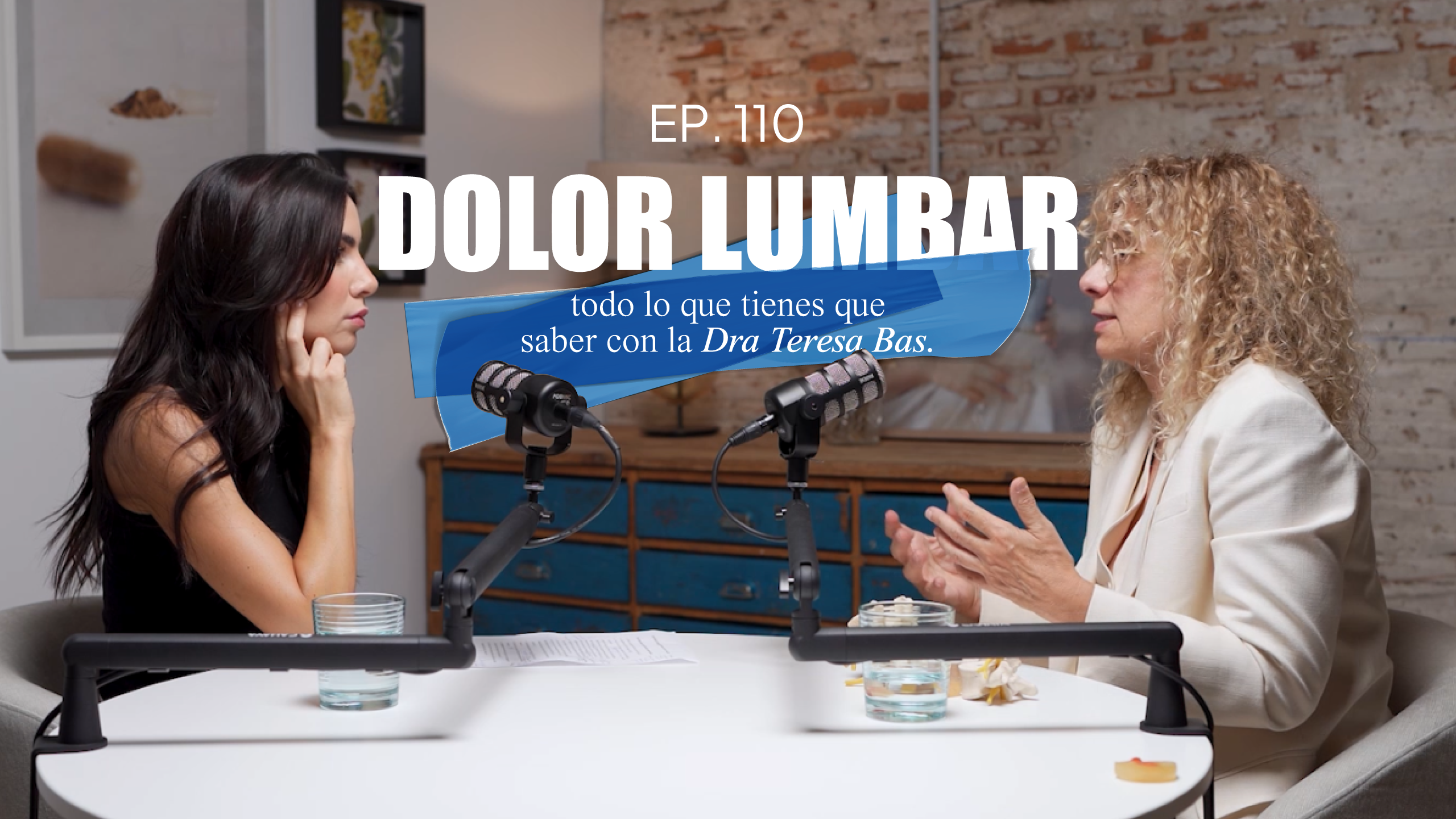
EP 110. Lumbar Pain with Dr. Teresa Bas.
Hellooooo:), welcome back to another episode of the podcast and the start of a new season, which comes with some very important new features: among them, the addition of video format and the presence of very special guests, both on a personal and professional level. And I think there could be no better person to accompany me at this beginning than Dr. Teresa Bas: spine surgeon, expert in the treatment of scoliosis in adults and children, head of the Spine Unit at the La Fe University Hospital in Valencia, associate professor at the University of Valencia and, also, my mother. In today's episode, we'll learn what lower back pain is, its various causes, what distinguishes it from sciatica, and how these problems are addressed medically and surgically. We'll also explore lifestyle changes and supplements that can help improve lower back pain, herniated discs, and sciatica, as well as the crucial role of exercise and nutrition in spinal health. And last but not least, we'll discuss the differences in spinal pathology between women and men. I hope you find it useful and learn a lot. My mother's Instagram handle is @dra.teresabas His private practice is Clinica Bas, located at Joaquin Costa 42 in Valencia, Spain. His work at the hospital is in the Spine Unit at the La Fe University and Polytechnic Hospital in Valencia, Spain. For more information, you know you can find me on Instagram @isabelvina where I share daily content. My TikTok @isabelvinabas On my YouTube channel And the supplements I've formulated are on my website . My website -
EP 108. Body composition in summer: how not to lose what you have gained.
Hello!!! In today's podcast, I'll try to share tips you can apply to maintain all the health gains you've made with your lifestyle routine throughout the year. This way, if you wish, you can fully enjoy the summer while minimizing the metabolic and overall health losses that can be associated with typical summer routines, where we can't be as diligent with our exercise, diet, and other lifestyle measures. It's not necessary to apply them all, or all at once. The important thing is to be aware of them so that, if we wish, we can apply them. Ideally all of them, but if not, any you can apply, even for just a couple of days, will always be beneficial. Every little helps. Every stone makes a wall. I hope you like it. Big kisses!! For more information, you know you can find me on Instagram @isabelvina where I share daily content. My TikTok @isabelvinabas On my YouTube channel https://www.youtube.com/channel/UC-dfdxLBcvfztBvRAKZSXGQ And the supplements formulated by me https://ivbwellness.com For more information, you know you can find me on Instagram @isabelvina where I share daily content. My TikTok @isabelvinabas On my YouTube channel And the supplements I've formulated are on my website . My website -
EP 97. Histamine and Health: The Connection You're Ignoring.
Hola :) In today's episode, I'm going to talk to you about everything related to the biogenic amine that our body produces normally and that, when in balance, is key for the immune system, memory, pain management, stomach acid production, and appetite control. HOWEVER, when it's in excess, it can lead to symptoms and signs that are "so" unrelated to each other, such as:Hives, itchy skinAbdominal bloating, abdominal pain, diarrheaRunny nose, itchy nose, cough, continuous tearingHypotension, tachycardiaMuscle and joint painI will also tell you about the endogenous (our body) and exogenous (diet or medication) origins of histamine accumulation.What can we do to diagnose histamine excess, first ruling out mastocytosis, mast cell activation syndrome, diseases like celiac disease, autoimmune conditions...What foods are high in histamine, which are lowSupplements that can help: quercetin, vitamin D, butyrate, trans resveratrol, probiotics like L. rhamnosus GG, L. plantarum...For more information, you know you can find me on my Instagram @isabelvina where I share daily content My TikTok @isabelvinabas On my YouTube channel https://www.youtube.com/channel/UC-dfdxLBcvfztBvRAKZSXGQ And the supplements formulated by me https://ivbwellness.comFor more information, you know you can find me on my Instagram @isabelvina where I share daily content My TikTok @isabelvinabasOn my YouTube channel YouTube ChannelAnd the supplements formulated by me on my website My Website -
EP 107. Bile and Gallbladder Health: How to Care for Your Gallbladder and Improve Digestion
Hola :)Hoy vamos a hablar de la salud biliar Espero que este episodio del podcast sobre la salud biliar os aporte luz y claridad sobre un tema tan importante… y a menudo tan olvidado.A lo largo del episodio aprenderás dónde se produce la bilis, cuáles son sus funciones, cuál es su composición y por qué es tan importante su almacenamiento en la vesícula biliar.También te contaré qué estímulos provocan su liberación, cómo es el metabolismo intestinal de la bilis una vez secretada, y por qué es clave la microbiota, el consumo de grasas saludables y fibra para mantener el equilibrio del metabolismo biliar… y del metabolismo global.Asimismo, hablaremos de qué fáctores pueden favorecer la aparición de calculos biliares como el exceso de estrogenos o de colesterol hepatico.Y, por supuesto, hablaremos de algunos complementos alimenticios que pueden ayudar a optimizar el flujo de la bilis, como la taurina, la glicina, el extracto de alcachofa, el cardo mariano o el conocido ácido TUDCA.Espero que os guste y sobre todo os ayude a saber mas para temer menos y elegir mejor :)Para mas información ya sabéis que me tenéis en mi instagram @isabelvina dónde te comparto contenido diario Mi TikTok @isabelvinabas En mi canal de YouTube https://www.youtube.com/channel/UC-dfdxLBcvfztBvRAKZSXGQY los suplementos formulados por mi https://ivbwellness.com-Para mas información ya sabéis que me tenéis en mi instagram @isabelvina dónde te comparto contenido diario Mi TikTok @isabelvinabasEn mi canal de YouTube Canal YoutubeY los suplementos formulados por mi en mi web Mi web -
EP 106: No Period and No Libido: The Hormonal Cost of Chronic Stress.
Hello :)In today's episode, I try to explain why chronic stress (both mental and physical) can directly affect our reproductive axis and, at the same time, indirectly affect other hormonal axes like the thyroid axis and prolactin, contributing to the worsening of stress-related reproductive symptoms by perpetuating the stress cycle --> lack of adequate GnRH synthesis --> FSH and LH --> regular menstruation, ovulation, testosterone production...I also talk about several supplements that ALWAYS follow lifestyle measures and do not replace them, which are:Stress: magnesium, omega 3, glycine, theanine, reishi, rhodiola, schisandra, ashwagandha, B vitamins like B12, B6, B9...Thyroid function: myo-inositol, CoQ10, selenium, iodine, vitamins B1 and B3..Prolactin: vitex agnus (chasteberry) and magnesiumI hope it's helpful :) a kissFor more information, you know you can find me on my Instagram @isabelvina where I share daily contentMy TikTok @isabelvinabasOn my YouTube channel https://www.youtube.com/channel/UC-dfdxLBcvfztBvRAKZSXGQAnd the supplements formulated by me https://ivbwellness.comFor more information, you know you can find me on my Instagram @isabelvina where I share daily contentMy TikTok @isabelvinabasOn my YouTube channel YouTube ChannelAnd the supplements formulated by me on my website My Website -
EP 104. Aldosterone: The Hormone That Raises Your Blood Pressure.
Hello!!In today's podcast episode, I'm talking about hypertension, but not just any kind, rather the one associated with an excess of a little-known hormone: aldosterone.I'll explain what signs might indicate that our high blood pressure is due to an excess of this hormone. How to assess it analytically, what tests would be necessary if blood tests reveal high aldosterone levels. What specific treatments exist, what lifestyle measures to follow: how much fiber, exercise, salt, or potassium to consume… Supplements that can help us, such as taurine, magnesium, olive leaf extract (standardized in oleuropein), hawthorn extract, or citrulline. How to correctly measure blood pressure, and much more. I hope you like it and, above all, find it useful : )For more information, you know you can find me on my Instagram @isabelvina where I share daily content.My TikTok @isabelvinabasOn my YouTube channel https://www.youtube.com/channel/UC-dfdxLBcvfztBvRAKZSXGQAnd the supplements formulated by me at https://ivbwellness.comFor more information, you know you can find me on my Instagram @isabelvina where I share daily content.My TikTok @isabelvinabasOn my YouTube channel YouTube ChannelAnd the supplements formulated by me on my website My website -

EP 101. Vitamin B9: Why It Matters More Than You Think.
Vitamin B9 and Folic Acid: Why They Are Not Exactly the Same Hello, I am Dr. Isabel Viña Bas, physician and Scientific Director of IVB Wellness Lab. The vitamin B9 is one of those nutrients that almost everyone automatically associates with pregnancy. And yes, it is essential during this stage, but reducing it to "the vitamin that pregnant women take" is only seeing a small part of the story. B9 is involved in processes that happen every day, whether you are trying to get pregnant or not: blood cell production, homocysteine metabolism, neurotransmitter synthesis, nitric oxide production, collagen formation, and liver detoxification reactions. In addition, there is a huge confusion between two terms that we use as if they were synonyms: folate and folic acid. My goal here is to help you understand that difference and, above all, to know what you should actually look for when reading the label of a food supplement. Because in vitamin B9, as is so often the case in nutrition, it's not just about how much you take: the form in which it reaches your body matters immensely. Vitamin B9, folate, and folic acid: are they really the same thing? When we talk about vitamin B9 or folates, we are referring to a family of natural and active molecules. The base form is tetrahydrofolate, from which other functional forms derive, such as 5-methyltetrahydrofolate, one of the most important in our body. El folic acid, on the other hand, is a synthetic molecule created in a laboratory and used for decades to fortify foods and manufacture low-cost food supplements. The fundamental difference is that our body cannot use it directly: it first has to transform it. I like to think of it like buying a piece of furniture that still needs to be assembled. Active folate is already assembled and ready to go into the room and do its job. Folic acid arrives in pieces, and the liver has to assemble it before useIf that assembly line is slow or limited, some of the material is left waiting. The folic acid bottleneck: why the supplement form matters To convert synthetic folic acid into forms that the body can use, the liver requires several enzymatic transformations. One of the main ones depends on the enzyme dihydrofolate reductase, o DHFR. This enzyme has a limited capacity, around 300 micrograms dailyTherefore, if a person takes larger amounts of inactive folic acid, it may not all be converted with the same efficiency. Here is one of the reasons why I insist so much on reading the label. If we are looking to provide vitamin B9, it is much more interesting to find already active or pre-activated forms: names like this may appear on the packaging 5-methyltetrahydrofolate, 5-MTHF, Quatrefolic®, Metafolin®, or Lederfolin®. It's not about obsessing over technical words. It's about understanding that two products can declare "400 micrograms of vitamin B9" and yet, do not provide the same molecular form. MTHFR: why your genetics make choosing active folate even more important There are also people who have a reduced ability to convert folate due to variants of the MTHFR gene. I am speaking specifically of the C677T polymorphism, which can significantly decrease the ability to produce 5-methyltetrahydrofolate. This turns the previous process into a sort of highway with fewer lanes: the nutrient may be present, but the body has more difficulties to bring it to its final usable form. These variants are especially common in the Mediterranean population. That is why, for people in this situation, it makes even more sense to choose a B9 shape already activated instead of relying solely on the metabolic conversion of folic acid. Where do we find vitamin B9 in food? Vitamin B9 is highly present in plant-based foods: unfortified nutritional yeast, sunflower seeds, legumes, leafy green vegetables, asparagus, broccoli, Brussels sprouts, and avocado, orange, banana, and wheat germ. But there is a small problem: folate is a rather heat-sensitive That is why it makes sense to combine cooked vegetables with other gentler preparations: raw leafy greens when well tolerated, uncooked avocado, and techniques such as vapor rather than very long cooking times. Eating folate is not enough: zinc, alcohol, and digestive acidity also matter Another idea that I think is very important is that a diet rich in folate does not automatically guarantee that we are going to use them well. Antes de absorberlos, nuestro aparato digestivo tiene trabajo que hacer. The folates present in food usually appear in forms called polyglutamates. To process them, we need an intestinal enzyme, the folate hydrolase, cuya actividad depende del zinc. Además, el alcohol puede inhibir esta enzima. Then comes the absorption phase. In the proximal small intestine, there is a transporter called PCFT that functions best in an acidic environment. This is why drugs that intensely reduce gastric acidity, such as some proton pump inhibitors, can interfere with this route of absorption. It is a good example of why, when a deficiency appears, we should not only look at "how much folate you eat." We must look at diet, digestion, medication, alcohol, and metabolic capacity Vitamin B9 and homocysteine: why does it work as a team with vitamin B12? One of the most important functions of folates occurs in homocysteine metabolism. The homocysteine, when it accumulates, is associated with a more inflammatory, oxidative, and procoagulant environment. work in tandem with vitamin B12. Folate and B12 work together in a sort of metabolic pathway that allows homocysteine to be transformed and continue generating essential molecules. From this pathway comes, among other things, SAMe (S-adenosylmethionine), a methyl group donor essential for many reactions: synthesis of melatonin and catecholamines, maintenance of the myelin Here is an important clinical warning: if we detect a folate deficiency, we must also assess vitamin B12. Giving B9 in isolation can mask signs of a B12 deficiency From serotonin to nitric oxide: how far does B9 really go? Another reason why I say vitamin B9 matters much more than we think is that it is involved in the production of tetrahydrobiopterin. This molecule acts as a cofactor in essential pathways for producing nitric oxide, serotonin, and dopamine. Nitric oxide is one of the body's major vasodilators. That is why I link an adequate availability of folates with the vascular health, with blood pressure regulation, and with erectile function. In the brain, those same pathways are involved in the production of serotonin and dopamine. When folate is lacking, symptoms may appear that seem non-specific (fatigue, irritability, headache, or mood changes), but make sense when we understand everything this vitamin does to biochemical level. Collagen, glutathione, and bile: the unexpected connection with glycine There is a connection with vitamin B9 that is almost never explained: its relationship with the wisteria. El tetrahidrofolato participa en la transformación de serina en glicina, y la glicina es uno de esos aminoácidos pequeños que termina apareciendo en muchísimos procesos. We need it to manufacture glutathione, one of the body's main antioxidant systems, to conjugate bile acids, for phase 2 liver detoxification reactions, and for build collagen. I like to use a very graphic fact: glycine is constantly repeated in the helical structure of collagen. That is to say, even when we think of skin, joints, or connective tissue, the B9 metabolism keeps appearing behind the scenes. Folic acid and pregnancy: why you need to start before a positive test? Here we come to the most well-known function of vitamin B9, and also one of the most important. I recommend starting an adequate intake of folate approximately three months before before starting to trying to conceive. The reason is simple: embryonic development begins long before many women even know they are pregnant. The neural tube closes around the first weeks of gestation, so wait for a positive test can mean arriving late to that initial phase. But the relationship with fertility no es exclusivamente femeninaIn men, folates contribute to the maintenance of sperm DNA integrity preconception preparation, tiene sentido pensar en la pareja y no únicamente en la mujer. It is also associated with adequate folate status during pregnancy with fetal development, the placenta, and intrauterine growth. Again, the key lies in arrive with adequate reservations before gestation begins, rather than trying to correct them once the process is already underway. How much vitamin B9 do we need and what should you look for in a supplement? The recommended amounts range between 400 and 600 micrograms daily for the general population and pregnancy, and between 800 and 1,000 micrograms for twin pregnancies. A maximum safety limit of 1,000 micrograms daily is also established. Rather than chasing huge doses, my advice is to look at the form first. If a label simply says "folic acid," you are looking at the synthetic form that needs activation. If 5-MTHF, 5-methyltetrahydrofolate, or an equivalent form like Quatrefolic® or Metafolin® appears, we are talking about already activated folate. meet needs in a useful and secure way, do not stack food supplements without context. How to know if you are deficient in vitamin B9? A sustained deficiency can eventually lead to megaloblastic anemia, with symptoms such as fatigue, shortness of breath, or palpitations. Headaches, irritability, and digestive issues may also occur. Analytically, it follows a very useful sequence: first, serum folate may drop; next, homocysteine may rise; later, intraerythrocytic folate (which better reflects the reserves of recent months) may decrease; and, finally, there appears the anemia. That is why it is not advisable to wait until you have overt anemia to start investigating. In people with symptoms, restrictive diets, intestinal problems, celiac disease, SIBO, or pharmacological treatments that interfere with this pathway, it makes sense interpret the markers within the complete clinical context. So, what is the most important thing to remember about vitamin B9? That "vitamin B9" and "folic acid" they are not exactly the sameThat molecular form matters. That your genetics, your digestion, and certain medications can change how much you benefit from it. And that its function doesn't end with pregnancy: it plays a role in blood vessels, neurotransmitters, collagen, glutathione, homocysteine, and cell division. If I had to summarize it in a single idea, it would be this: when you read a label, don't just look at the number of micrograms. Also ask yourself what form of folate it contains much more informed decisions I hope you like it :) For more information, you know you can find me on my Instagram @isabelvina, where I share daily content with you My TikTok @isabelvinabas YouTube ChannelAnd the supplements formulated by me on my website My website -
EP 96. Myo-inositol, Hormonal Benefits, and Lipedema.
Hola, en el episodio de hoy os cuénto:-Myoinositol: qué funciones tiene esta pseudovitamina en la adecuada función tiroidea, metabolismo de la insulina, fertilidad, acné, sueño y estado de animo.-Lipdema: qué es esta enfermedad de tejido contjuntivo laxo, por qué no tiene nada que ver con el exceso de grasa o celulitis y cómo podemos manejarla para mejorar la calidad de vida.Entre los suples que hablo del lipedema estánManejo del dolor e inflamación-PEA: Zerodol -Omega 3-Curcuma-BoswelliaManejo de liquido intersticial y permeabilidad vascular:-Trebol de olor amarillo (melilotus officinalis)-Extracto de semillas de uva ( vitis vinifera)-Diosmina y hesperidina-Cataño de indias-Diente de león-Cola de caballo-Extracto de uva ursi -PerejilPara mas información ya sabéis que me tenéis en mi instagram @isabelvina dónde te comparto contenido diario Mi TikTok @isabelvinabas En mi canal de YouTube https://www.youtube.com/channel/UC-dfdxLBcvfztBvRAKZSXGQY los suplementos formulados por mi https://ivbwellness.comPara mas información ya sabéis que me tenéis en mi instagram @isabelvina dónde te comparto contenido diario Mi TikTok @isabelvinabasEn mi canal de YouTube Canal YoutubeY los suplementos formulados por mi en mi web Mi web -
EP 94. How Does Your Brain Get Fed? With Dr. Juan Viña.
Helloooo :)Today's episode is a very special one because I'm lucky enough to have the wisdom of my father, the doctor and professor of biochemistry and molecular biology, Juan Viña, join me again to discuss brain metabolism in detail. He will tell us (among other things):How does brain metabolism differ from the metabolism of the rest of the body?Can fatty acids be used in the brain as an energy source?How do amino acids reach the brain and which are the most important?Why taking carbohydrates with proteins can optimize our melatonin and serotonin production.Why glycine is a key amino acid for brain health.What choline is and why it's key for memory and learning.Cholesterol and the brain: what is the relationship between them.I hope you like it!!For more information, you know you can find me on my Instagram @isabelvina where I share daily content.My TikTok @isabelvinabasOn my YouTube channel https://www.youtube.com/channel/UC-dfdxLBcvfztBvRAKZSXGQAnd the supplements formulated by me https://ivbwellness.comFor more information, you know you can find me on my Instagram @isabelvina where I share daily content.My TikTok @isabelvinabasOn my YouTube channel YouTube ChannelAnd the supplements formulated by me on my website My website


