



Partially hydrolyzed guar gum
Quick facts
 Clinical trials indicate that 5–10 g/day of PHGG for 8–12 weeks improve stool regularity and consistency, with good tolerance even in IBS.

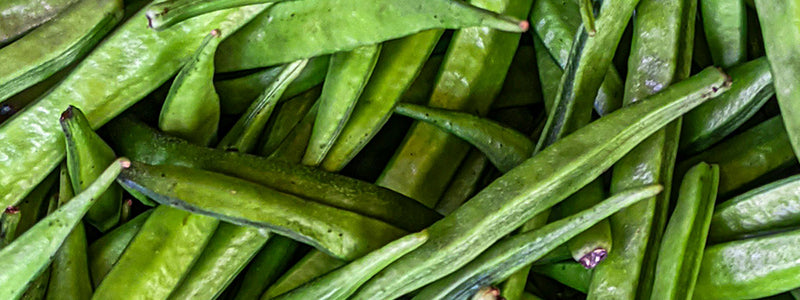
Partially hydrolyzed guar gum, known by its acronym PHGG (Partially Hydrolyzed Guar Gum), is a soluble fiber derived from guar gum, a natural polysaccharide found in the seeds of the Cyamopsis tetragonoloba plant.
Unlike traditional guar gum, which is highly viscous and difficult to digest, PHGG is obtained through an enzymatic process that partially breaks down its long galactomannan chains.
The result is a low-viscosity fiber that is highly soluble in water and has excellent digestive tolerance, which can be added to beverages or foods without altering their flavor or texture.
Its main value lies in its ability to act as a prebiotic, meaning it serves as food for beneficial gut bacteria. Therefore, it is one of the most studied fibers in relation to digestive health and intestinal well-being.
How does it work?
PHGG is not digested in the small intestine but reaches the colon intact, where it is fermented by the gut microbiota.
During this process, beneficial bacteria—mainly Bifidobacterium and Lactobacillus—transform the fiber into short-chain fatty acids (SCFAs), such as butyrate, propionate, and acetate.
These compounds perform essential functions:
- They nourish colon cells and strengthen the intestinal barrier.
- They regulate local and systemic inflammation.
- They contribute to the balance of the intestinal ecosystem.
Thanks to this mechanism, PHGG helps improve bowel regularity, promote stool consistency, and reduce mild symptoms of bloating or gas.
Furthermore, its low fermentability makes it a particularly suitable fiber for individuals with sensitive digestion or those following low FODMAP diets.
Science-Based Benefits
Digestive Health and Microbiota
Several clinical trials have confirmed the positive effects of PHGG on intestinal function.
In a study with 88 healthy volunteers, Yasukawa et al. (2019) observed that 5 g daily for eight weeks improved stool consistency, increased bowel movement frequency, and promoted the growth of beneficial bacteria like Bifidobacterium.
The PAGODA trial by Reider et al. (2020) demonstrated that PHGG supplementation significantly altered the composition and function of the human gut microbiota. In this randomized controlled trial, participants consuming PHGG showed higher production of short-chain fatty acids and an increase in microorganisms associated with a healthy gut profile.
Finally, a systematic review by Kapoor et al. (2017) concluded that daily doses of 5 to 10 g of PHGG help prevent constipation and maintain bowel regularity in various populations, with excellent tolerance.
Irritable Bowel Syndrome (IBS)
In a double-blind, placebo-controlled trial, Niv et al. (2016) evaluated 6 g of PHGG daily for 12 weeks in patients with irritable bowel syndrome (IBS). The results showed a significant reduction in bloating and flatulence symptoms, and an improvement in overall digestive comfort, with no relevant side effects.
Thanks to its good tolerance and progressive action, PHGG is considered an interesting option within the dietary management of mild or functional IBS.
General Well-being and Gut-Brain Axis
Research on the relationship between microbiota and mental well-being has recently included PHGG.
Abe et al. (2024) studied healthy older adults for 12 weeks, administering 5 g daily. Improvements in visual memory and sleep quality upon waking were observed, with no adverse reactions.
Although the exact mechanisms are still being investigated, it is believed that microbiota balance and the production of metabolites like butyrate may play a role in gut-brain communication.
Dosage and Consumption Methods
- Clinical trials have used doses ranging from 5 to 10 grams daily.
- It can be dissolved in water, herbal teas, juices, or yogurts without altering flavor or texture.
- It is advisable to start with 3 g per day during the first week and increase progressively.
- Maintaining adequate hydration is essential for the fiber to function correctly.
- Effects are typically noticed after 2 to 4 weeks of continuous use, although some studies observed digestive improvements even sooner.
Safety and Potential Side Effects
PHGG has a very favorable safety profile. Clinical trials have not reported significant side effects, and its low fermentability reduces the risk of flatulence or intestinal discomfort.
When starting consumption, a mild sensation of fullness or transient gas may occur, which tends to disappear as the microbiota adapts.
Its use is not recommended for young children or individuals with severe intestinal diseases without medical supervision.
Conclusions
Partially hydrolyzed guar gum is a source of soluble fiber with solid clinical evidence for improving intestinal function and promoting microbiota balance.
Its excellent tolerance distinguishes it from other more fermentable fibers and makes it a useful tool for promoting digestive health safely and sustainably.
While it does not replace a diet rich in fruits, vegetables, and whole grains, it can be an effective supplement within a balanced intestinal wellness plan.
References
- Abe A, Kapoor MP, Morishima S, Ozeki M, Sato N, Takara T, Naito Y. Effectiveness of Partially Hydrolyzed Guar Gum on Cognitive Function and Sleep Efficiency in Healthy Elderly Subjects in a Randomized, Double-Blind, Placebo-Controlled, and Parallel-Group Study. Nutrients. 2024 Apr 19;16(8):1211. doi: 10.3390/nu16081211. PMID: 38674901; PMCID: PMC11054110.
- Kapoor, Mahendra & Sugita, Masaaki & Fukuzawa, Yoshitaka & Okubo, Tsutomu. (2017). Impact of partially hydrolyzed guar gum (PHGG) on constipation prevention: A systematic review and meta-analysis. Journal of Functional Foods. 33. 52-66. 10.1016/j.jff.2017.03.028.
- Niv E, Halak A, Tiommny E, Yanai H, Strul H, Naftali T, Vaisman N. Randomized clinical study: Partially hydrolyzed guar gum (PHGG) versus placebo in the treatment of patients with irritable bowel syndrome. Nutr Metab (Lond). 2016 Feb 6;13:10. doi: 10.1186/s12986-016-0070-5. PMID: 26855665; PMCID: PMC4744437.
- Reider SJ, Moosmang S, Tragust J, Trgovec-Greif L, Tragust S, Perschy L, Przysiecki N, Sturm S, Tilg H, Stuppner H, Rattei T, Moschen AR. Prebiotic Effects of Partially Hydrolyzed Guar Gum on the Composition and Function of the Human Microbiota-Results from the PAGODA Trial. Nutrients. 2020 Apr 28;12(5):1257. doi: 10.3390/nu12051257. PMID: 32354152; PMCID: PMC7281958.
- Yasukawa Z, Inoue R, Ozeki M, Okubo T, Takagi T, Honda A, Naito Y. Effect of Repeated Consumption of Partially Hydrolyzed Guar Gum on Fecal Characteristics and Gut Microbiota: A Randomized, Double-Blind, Placebo-Controlled, and Parallel-Group Clinical Trial. Nutrients. 2019 Sep 10;11(9):2170. doi: 10.3390/nu11092170. PMID: 31509971; PMCID: PMC6769658.