






Saw Palmetto
Quick facts
 It has become popular for its potential effect on hair loss, especially in men with androgenetic alopecia, as it may act on the hormones involved in this process.

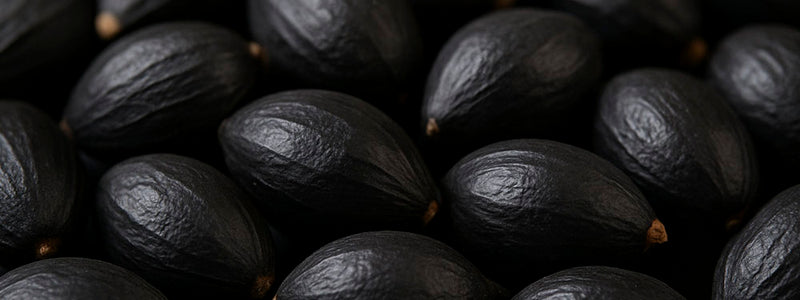
Saw palmetto is a natural extract obtained from the berries of the Serenoa repens plant, a dwarf palm that grows primarily in the southeastern United States. It has traditionally been used to treat urinary problems in older men, particularly those associated with benign prostate enlargement (known as benign prostatic hyperplasia or BPH).
In recent years, it has also gained popularity for its potential effect on hair loss, especially in men with androgenetic alopecia, as it may act on the hormones involved in this process.
How does it work?
Saw palmetto contains compounds such as fatty acids, phytosterols (like beta-sitosterol), and other components with biological activity. These are its main proposed mechanisms:
- Inhibition of 5-alpha-reductase: this enzyme converts testosterone into dihydrotestosterone (DHT), a hormone related to both prostate growth and hair loss. Saw palmetto may reduce the activity of this enzyme, although with much lower potency than drugs like finasteride.
- Anti-inflammatory effect: some extracts have shown the ability to reduce inflammation in prostate tissues.
- Pro-apoptotic action: in cellular studies, it has been observed to induce the death of abnormal prostate cells, although this is more theoretical in humans.
Benefits According to Science
Improvement of Urinary Symptoms in Men
One of the most well-known uses of saw palmetto has been to alleviate urinary problems that appear with age, such as difficulty starting urination, a feeling of incomplete emptying, or having to get up several times at night to urinate.
In a large analysis published in 1998, which combined results from 18 studies with nearly 3,000 men, saw palmetto was observed to help improve these symptoms in many cases. It was also found that it did not cause the sexual side effects sometimes caused by traditional medications.
However, in 2006, a more modern and rigorous study was conducted with over 200 men. In this study, saw palmetto was administered for a full year and compared to a group taking a placebo. At the end, no differences were found between the two groups: symptoms remained the same, and the extract showed no greater efficacy than the placebo.
What About Hair Loss?
Another common use of saw palmetto is as a natural aid for hair loss, especially in men (and also in some women) with androgenetic alopecia, which is the most common type of hormone-related hair loss.
In 2016, a clinical study conducted on men with this type of alopecia evaluated the use of a saw palmetto product applied directly to the scalp for 24 weeks. At the end of the trial, researchers observed that there had been a significant increase in the number of thick hairs (terminal hairs) in the treated area, compared to the group that used a placebo.
However, in many cases, saw palmetto is used along with other ingredients (such as biotin or caffeine), so it's not always clear how much of the effect is due solely to this plant. Nevertheless, the results suggest it may be useful as a natural supplement.
Dosage and Forms of Consumption
- Most common dosage: 160 mg twice a day (320 mg daily), especially in standardized products.
- Standardized lipid extracts: such as Permixon (a registered phytotherapeutic drug in Europe), which have been the most studied.
- In hair products: both oral capsules (100–320 mg/day) and topical lotions with concentrated extract are used.
Safety and Potential Side Effects
- Saw palmetto is well-tolerated by most people.
- The most frequent side effects are mild nausea, headache, or digestive discomfort, but they are generally uncommon.
- Some reports have warned of a possible risk of bleeding if combined with anticoagulants or used before surgery, so it is recommended to discontinue use at least one or two weeks before surgical procedures.
- Although there is no evidence of serious toxicity, it is not recommended for use in pregnant or breastfeeding women, as a precaution.
Conclusions
Saw palmetto is a plant that has been used for years as a natural aid for men, primarily for two reasons: relieving urinary discomfort and slowing hair loss. However, when examining the studies in more detail, the evidence is not so clear.
In the case of urinary problems due to prostate enlargement, some older studies showed improvement, but more recent and well-designed studies have not found significant benefits. This means it may work for some individuals, but it is not an effective treatment for everyone.
Regarding hair loss, the results are more promising. Some studies have observed improvements in hair quantity and quality, both with capsules and lotions, especially in individuals with mild to moderate loss. Nevertheless, more large-scale studies are needed to confirm these long-term effects.
Overall, saw palmetto is well-tolerated and can be an interesting natural option as a supplement, especially in mild cases. However, it should not be used as a substitute for medical treatment when necessary. It is always recommended to consult with a healthcare professional before starting to take it, especially if you are already using other supplements or medications.
References
- Bent S, Kane C, Shinohara K, Neuhaus J, Hudes ES, Goldberg H, Avins AL. Saw palmetto for benign prostatic hyperplasia. N Engl J Med. 2006 Feb 9;354(6):557-66. doi: 10.1056/NEJMoa053085. PMID: 16467543.
- Wessagowit V, Tangjaturonrusamee C, Kootiratrakarn T, Bunnag T, Pimonrat T, Muangdang N, Pichai P. Treatment of male androgenetic alopecia with topical products containing Serenoa repens extract. Australas J Dermatol. 2016 Aug;57(3):e76-82. doi: 10.1111/ajd.12352. Epub 2015 May 25. PMID: 26010505.
- Wilt TJ, Ishani A, Stark G, MacDonald R, Lau J, Mulrow C. Saw palmetto extracts for treatment of benign prostatic hyperplasia: a systematic review. JAMA. 1998 Nov 11;280(18):1604-9. doi: 10.1001/jama.280.18.1604. Erratum in: JAMA 1999 Feb 10;281(6):515. PMID: 9820264.